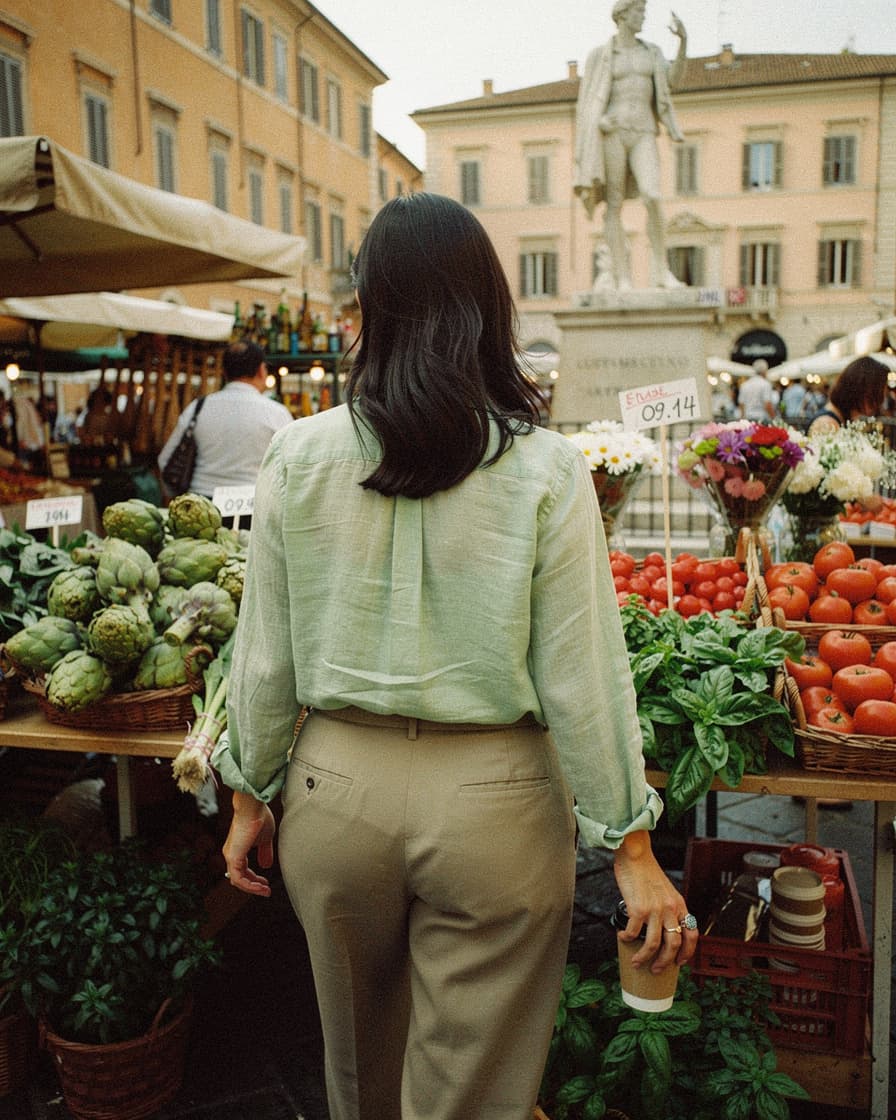
I got here before the tourists did. That’s the trick with Campo de’ Fiori, if there is one. Before ten it still belongs to the Romans. The vendors arranging tomatoes by shade of red, darkest in the back. The flower seller unwrapping peonies from wet newspaper. A woman in house slippers buying parsley like it’s the most important errand of the day. Maybe it is.
The artichokes are what stop me. Romanesco, tight and purple-tipped, still dusty from whatever field they came from an hour ago. The vendor doesn’t try to sell me anything. He sees the camera and looks away, which I appreciate more than he knows. I shoot two frames. The light is doing that thing Roman light does in the morning, falling sideways between the buildings, catching the mist off the wet cobblestones. It makes everything look like a painting you’d find in a grandmother’s kitchen.
Basil in fat bunches, the smell almost aggressive. I pick one up just to hold it near my face. Profumo di casa. It pulls me back to my father’s kitchen in Milan, Sunday mornings, sauce already going by eight. He would have opinions about these tomatoes. He would squeeze one, nod, buy a kilo without asking the price. I buy a small bag of cherry tomatoes and eat them like candy as I walk.
Bruno stands in the center of it all, bronze and hooded, facing the spot where they burned him. Now he overlooks crates of zucchini flowers and a man selling cheap lighters. There’s something Roman about that specific kind of layering, the terrible and the ordinary stacked on top of each other, neither one canceling the other out. I sit on the base of the statue and finish my tomatoes. A pigeon lands next to me, unimpressed. The market hums. Nobody is in a hurry. I load a new roll of film and decide I have nowhere else to be.