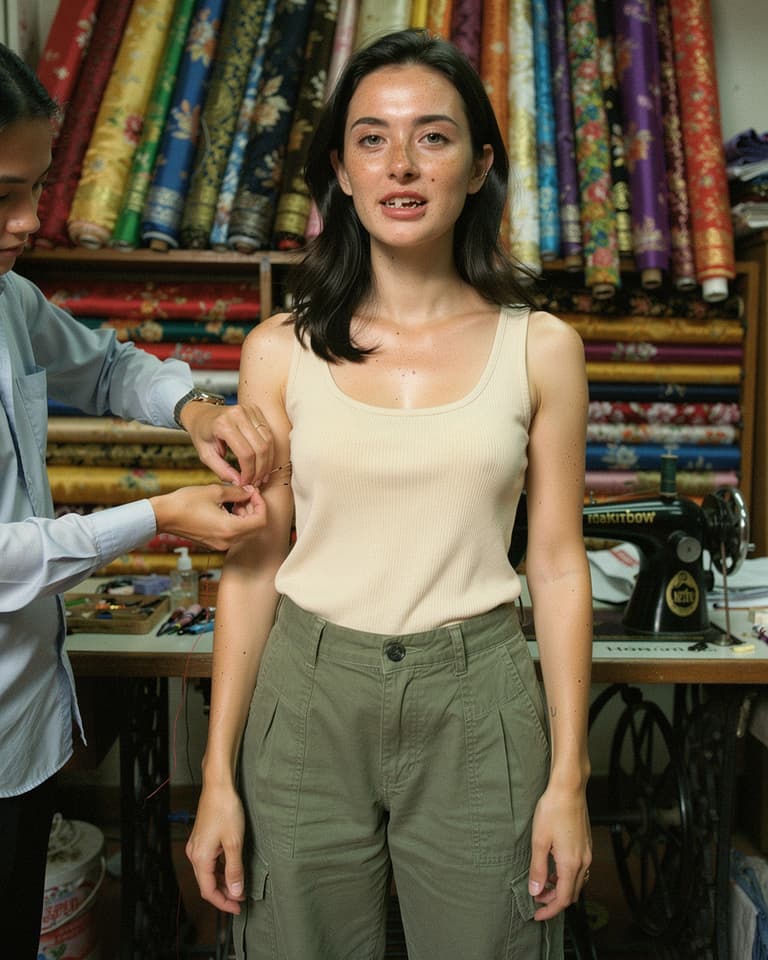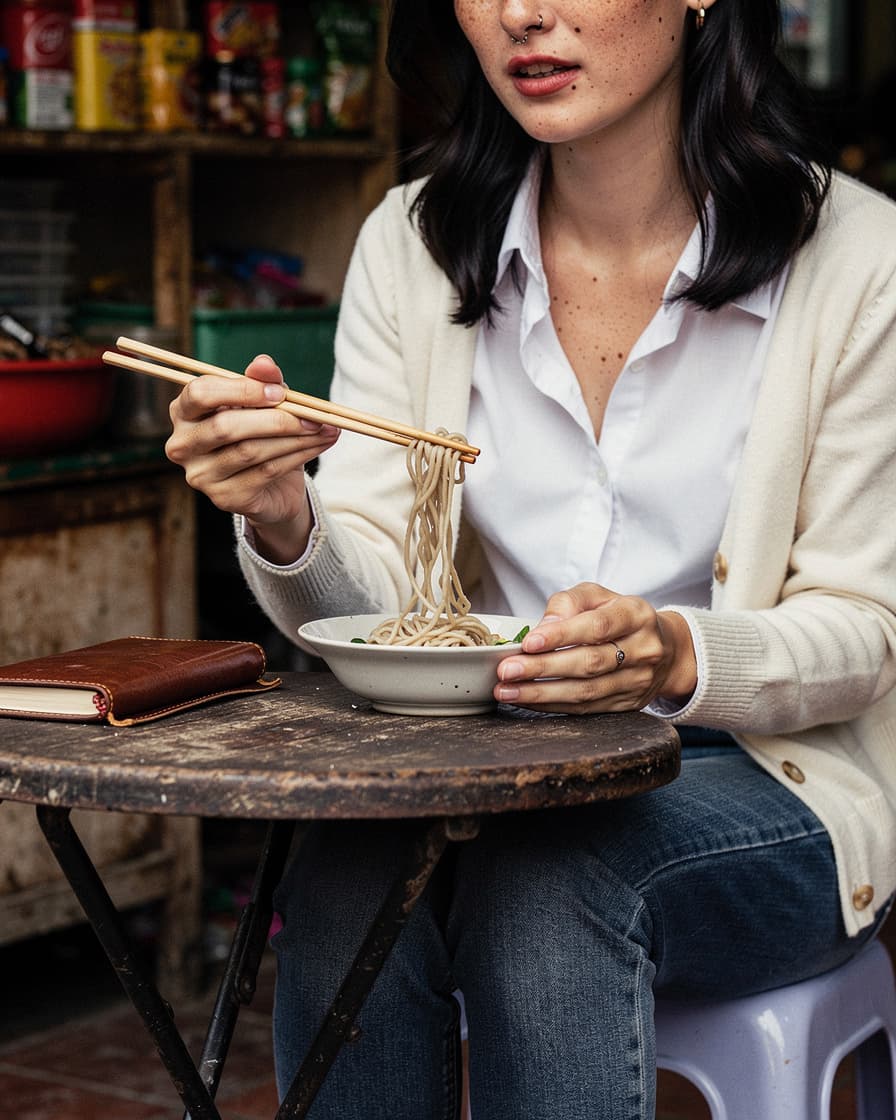
Six fifty and Tran Phu street is still rubbing its eyes. The shutters of the tailor shops are half up. A woman sweeps the step next to mine with a broom made of sticks, no words, just rhythm. I sit on a plastic stool low enough that my knees nearly touch my chin, which feels correct somehow, like the whole town is built for smallness and patience.
The cao lau arrives before I ask twice. Thick noodles, the color of raw silk, made only with water from a particular well here, or so they tell every traveler who sits down, and I believe it because why not. Pork slices soft at the edges. Greens still cold from the morning air. Crackling on top that breaks loud enough to make the old man at the next table glance up, half smile, go back to his tea.
There is a specific quiet to eating alone at an hour when the street has not decided what it wants to be yet. Not tourist hour, not market hour, just the in-between. Steam off the broth fogs the lens when I lift the camera, and I let it. Some mornings don't need to be sharp. The light coming through the shopfronts is already doing the work: soft, a little gold, undeserved the way Hoi An light often is.
I think about how far this bowl has traveled to sit in front of me, not in distance but in habit, generations of someone's grandmother getting the noodle thickness right before I was born in Milan to parents who never heard of this town. Saudade for a place I only just arrived to. Strange word for it, but there isn't a better one.
By seven thirty the street fills in. Bicycles, a tour group in matching hats, the smell of incense from a shophouse altar mixing with broth and frying oil. I finish, pay the small bill, and sit a minute longer than I need to. The noodles are gone. The ritual isn't.
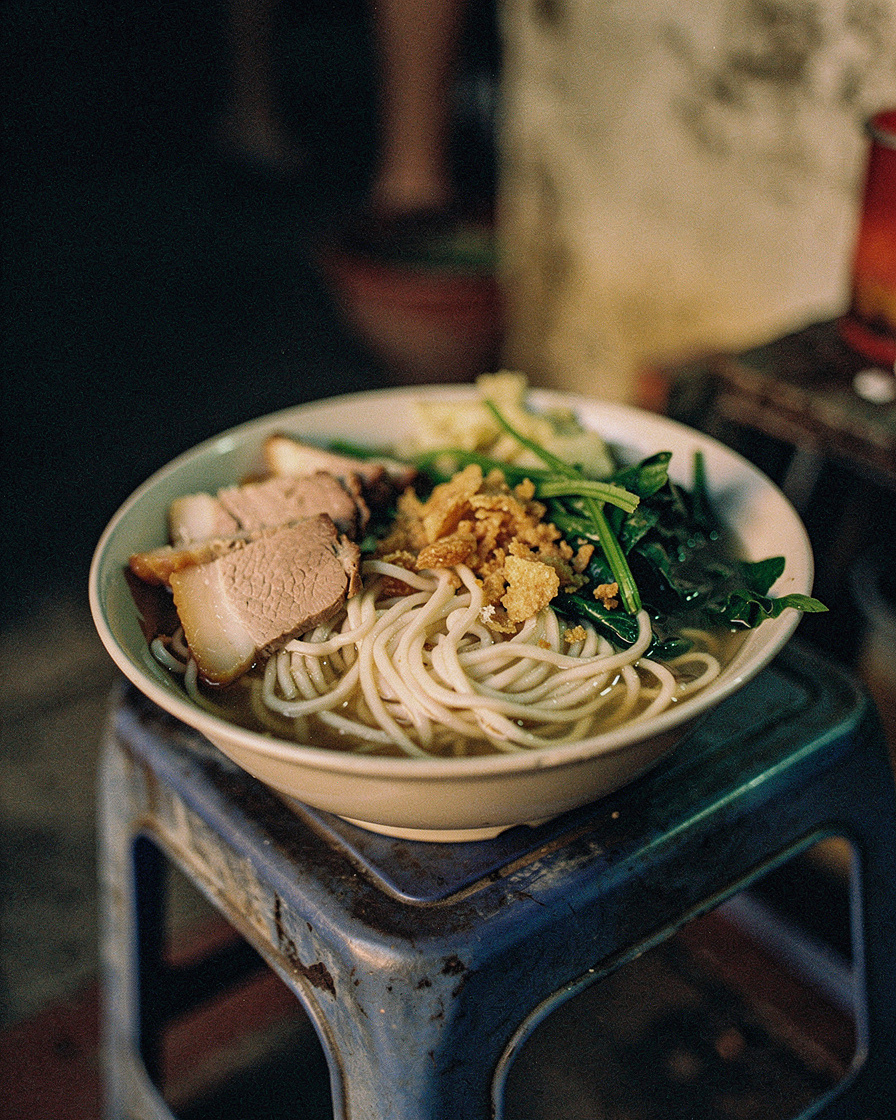
If you go: arrive before 7am to Tran Phu street, sit on the plastic stools, order cao lau with extra crackling, pay in cash.