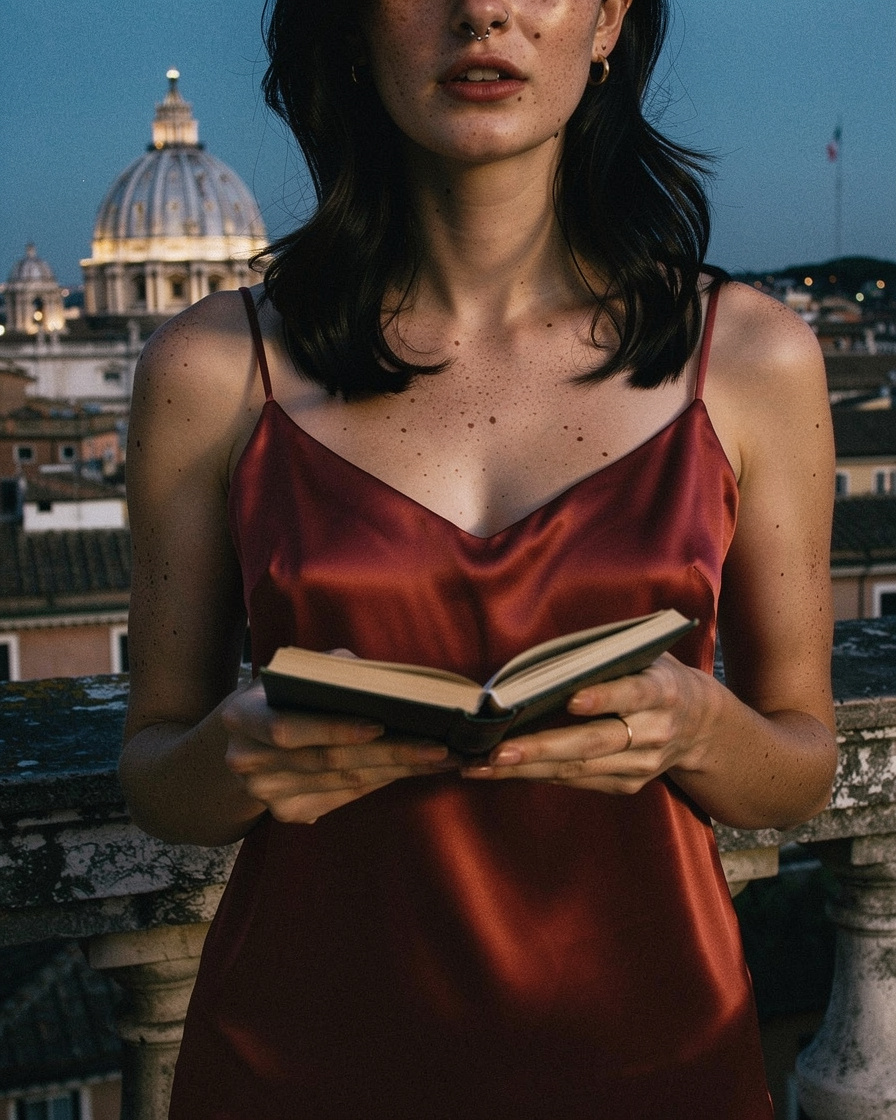
There is a moment in Rome, right around nine in the evening, when the light turns the colour of apricot skin and the city stops performing. The tourists thin out on the Pincio terrace. A few couples lean against the balustrade. Someone is playing something on a speaker, tinny and far away, and you can almost ignore it because the wind picks up and carries it off toward Trastevere.
I set the Leica on the stone ledge and just looked. The cupola of San Pietro, kilometres away, holding the last of the sun like it was doing you a personal favour. Below, Piazza del Popolo emptied and refilled with the small movements of people crossing it diagonally, taking shortcuts home. The obelisk at the centre threw a shadow I couldn't see from up here but knew was there. Swallows. Hundreds of them, drawing circles I couldn't decode.
Rome does something specific to scale. In most cities you feel like a participant. Here you feel like a footnote. My father used to bring me to this hill when I was nine, ten, and point at the dome and say, quella è la nostra, as if his family had personally built it. He said it every time. I never got tired of it. Standing here now, alone, the wind pulling at my jacket, I understand what he meant. Not ownership. Belonging. Or maybe just the need to claim something permanent when everything else keeps moving.
I took two frames. One of the skyline. One of the stone under my hand, warm from the day, already starting to cool. The film will flatten the light, lose some of the gold, give it back as something softer. That is what I want. Rome doesn't need to be louder than it already is. The shutter clicked and I stayed another twenty minutes, watching the sky turn from apricot to slate. No plans for dinner. No plans at all. The city will feed me when it is ready.