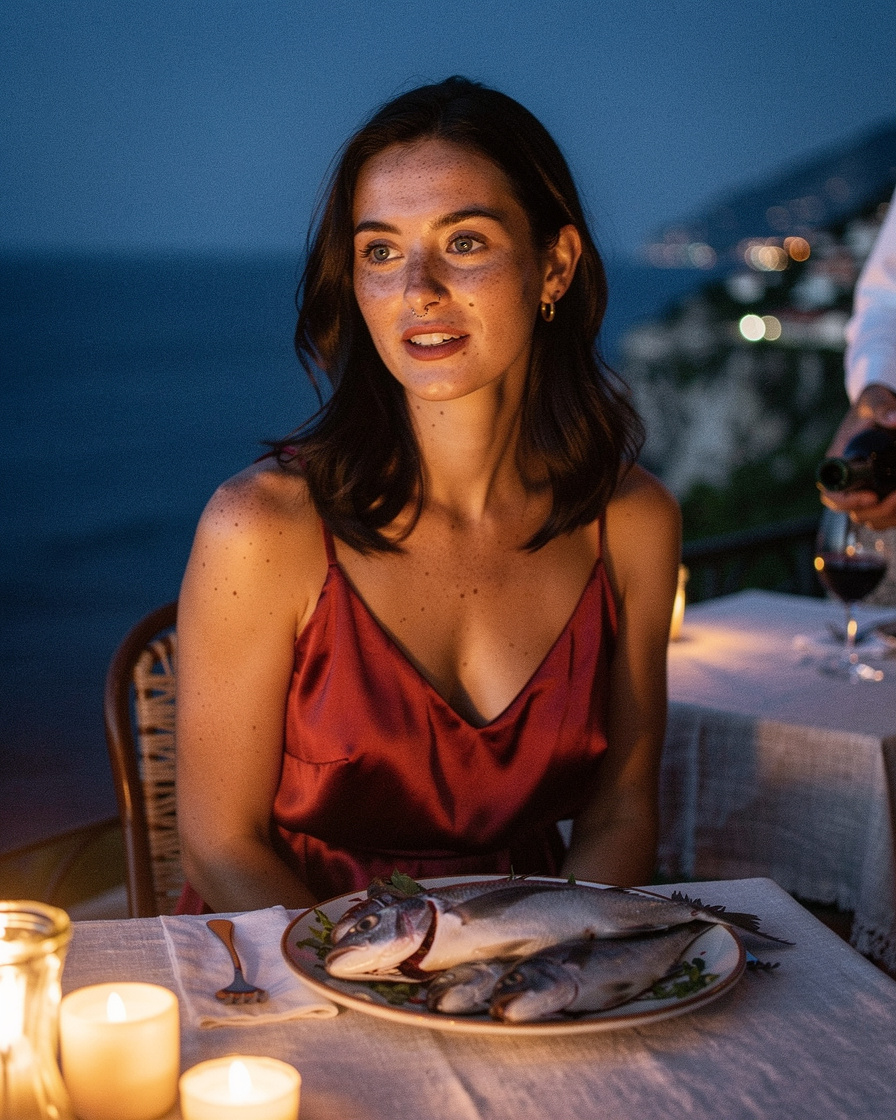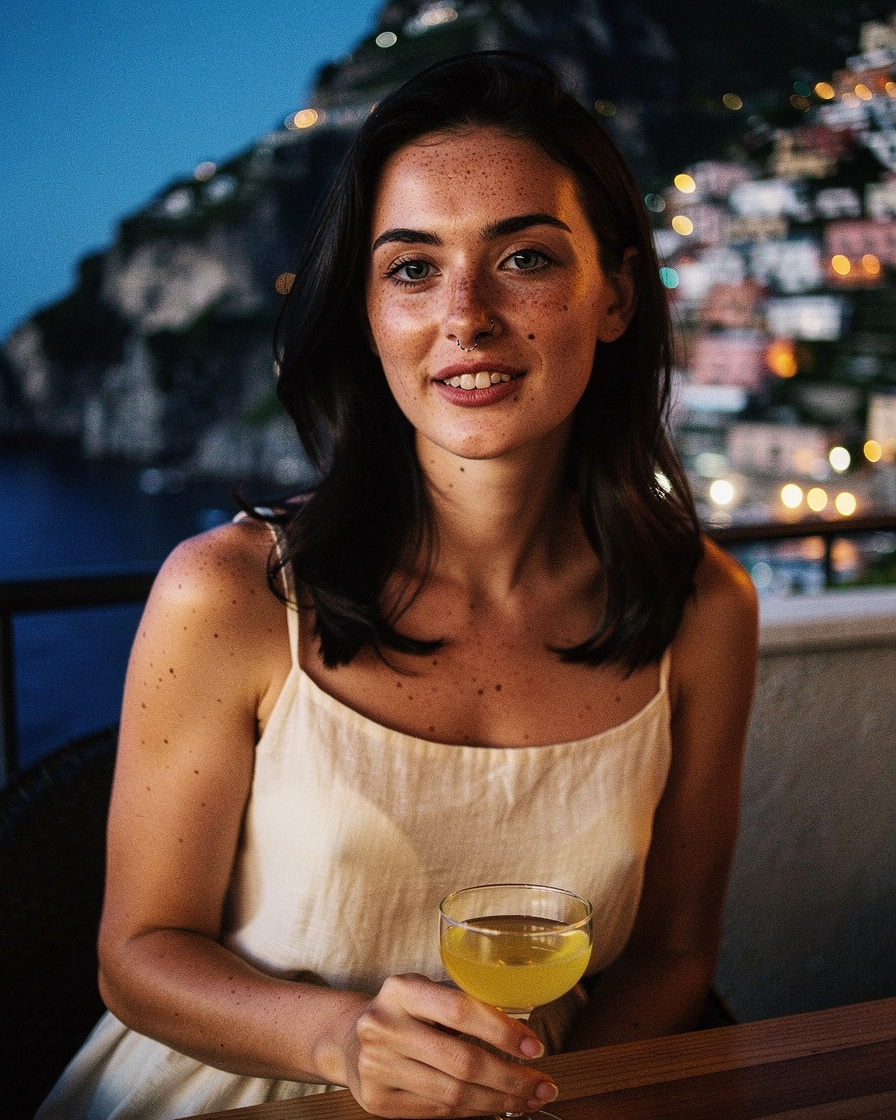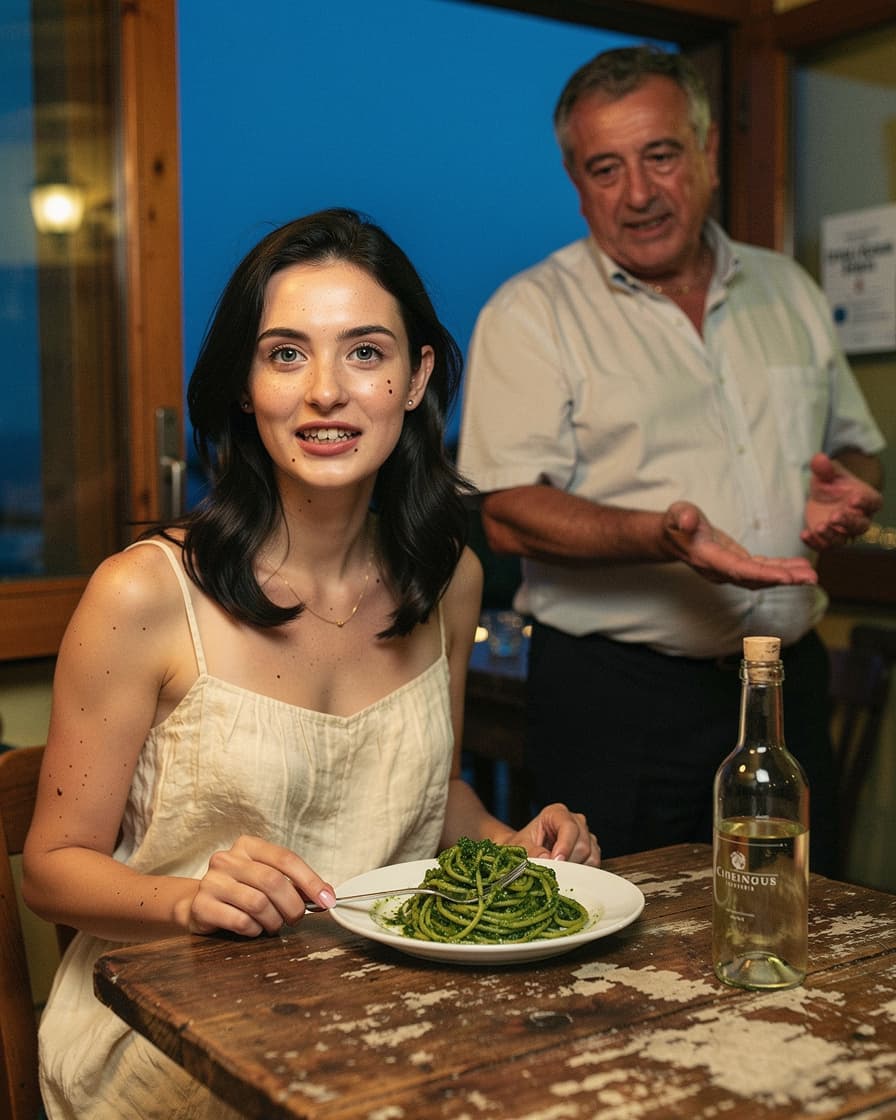
The trattoria sits three steps below street level. You duck in under a stone arch and the air changes. Basil, garlic, olive oil, warm bread. There are maybe six tables, none of them matching, and the owner is also the cook, the waiter, and apparently the entire history department of Riomaggiore. He has been explaining how his grandmother made pesto, how the basil must be small-leafed, grown above the sea, never touched by frost. He says the mortar matters more than the recipe. I believe him.
Outside, the last blue of the evening is fading over the harbor. I can hear voices bouncing off the painted houses, someone’s radio playing something old and Italian, the kind of song that belongs to no particular decade. My camera sits on the chair next to me like a quiet friend who knows when not to talk. I took one frame earlier, the carafe against the window, but honestly some meals don’t need documenting. They need eating.
The pasta is trofie, short and twisted, and the pesto clings to every fold. It tastes green. That’s the only word for it. Green in the way that a color becomes a flavor when the ingredients are this close to where they grew. The wine is local, Cinque Terre DOC, pale and cold with something mineral underneath, like the cliffs found their way into the glass. He pours it without asking if I want more. I don’t stop him.
I think about how my father used to say that the best restaurants never advertise. They just open the door. This place doesn’t even have a sign, just a menu written in felt-tip pen on a piece of cardboard. No English translation. No QR code. I asked for the pesto recipe and he laughed and said his grandmother would kill him. Then he told me half of it anyway. The basil, the salt, the pine nuts from a specific hillside. The rest, he said, tapping the side of his nose, stays in the family. Così va la vita.