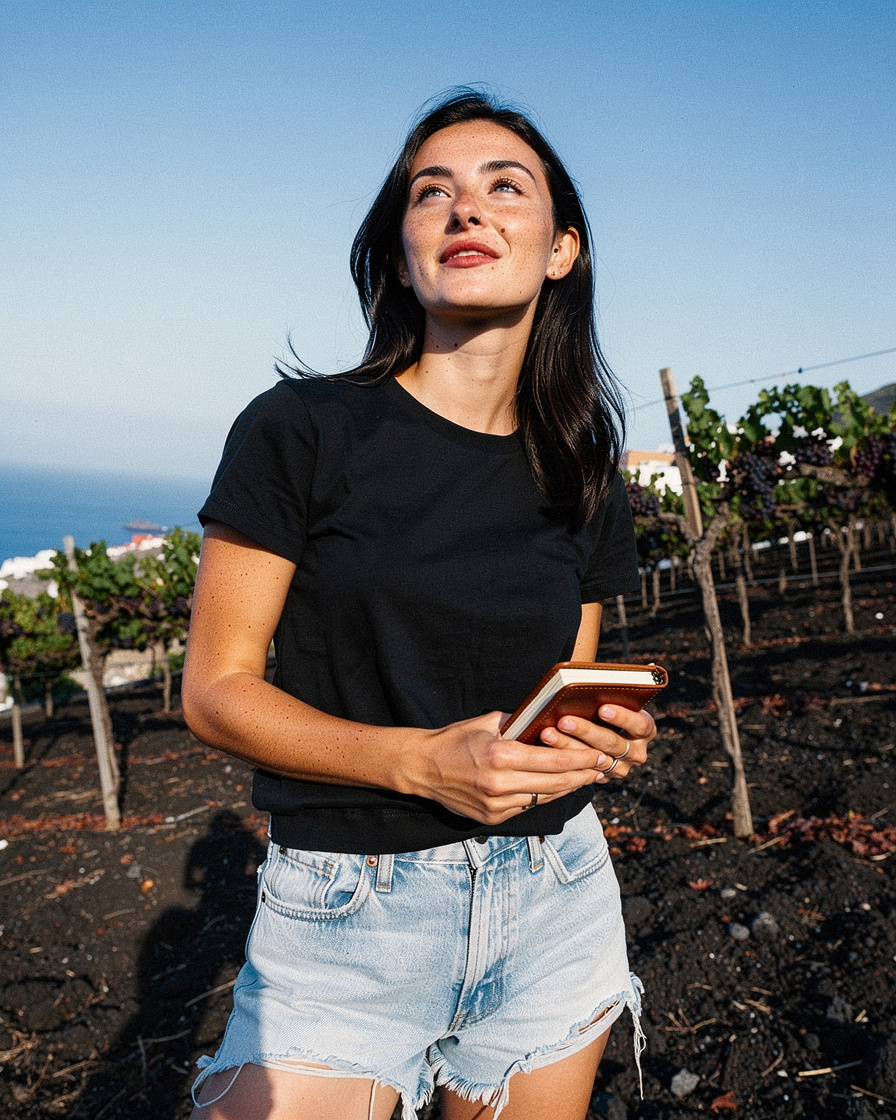
Nine in the morning and the vineyard is already warm. Not the damp, heavy warm of a Brazilian summer. This is mineral heat. It rises from the ground, from the black volcanic soil that looks like it should belong to the moon, not to a place that grows grapes. The vines are trained into low baskets, kouloura, wound tight against themselves to survive the meltemi winds. They look ancient. Stubborn. I like them immediately.
The woman pouring the wine speaks about Assyrtiko the way my father speaks about Barolo. With patience, and the quiet assumption that you will eventually understand. The first glass is pale gold, almost green at the rim. It tastes like salt air and wet stone and something citrus I can't name. I hold it up to the light. My camera sits on the table between us, loaded with Portra 400, catching its own version of the color. She tells me the vines are ungrafted, pre-phylloxera rootstock. Survivors.
I keep thinking about the soil. How nothing about it suggests life. It's powdery,ite black, sharp with pumice. You'd walk past it and think nothing could take root. But the grapes pull minerals from it that end up in the glass, on your tongue, in the memory you carry out of this place. There's something in that. The best things growing where you least expect.
Behind the vineyard, the caldera drops away and the sea starts. It is absurdly blue. Offensively blue. The kind of blue that makes you stop trusting your own eyes. I finish the glass slowly. A second one appears. The wind moves through the low vines with a papery sound, leaf against leaf. No one is in a hurry here. The grapes took centuries to learn this soil. I can give it a morning.