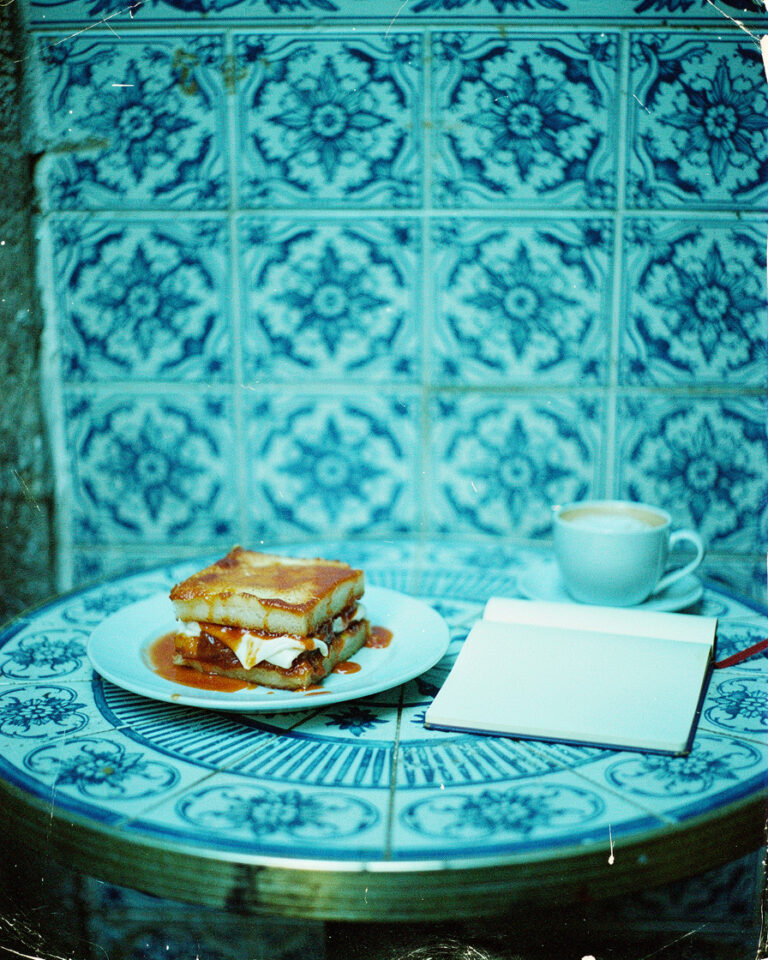
The buses leave at six, more or less. By six thirty Sintra belongs to someone else, and that someone else is me and a handful of cats and one man closing his shutters with the slow patience of someone who has done it ten thousand times. I sit on the edge of the fountain in the square below the palace. The tiles are cold through my dress. I notice this the way you notice a held breath.
The wine is sharp, almost green, the kind that tastes like it was bottled last Tuesday. I drink it slow because there is nowhere to be, which is its own kind of luxury, the kind nobody photographs well. My camera sits beside me on the stone, unbothered. It has seen a hundred squares like this one. It waits.
The air smells of damp moss and diesel and something sweeter underneath, maybe the pastry shop three streets up, still warm from the day. Somewhere a shutter rattles down. A dog barks once and gives up. The palace on the hill goes from gold to grey to almost nothing, the way a face does when it stops performing for company.
This is the hour the postcards don’t show you. Sintra during the day is a parade, all elbows and selfie sticks and tour guides shouting in six languages at once. Sintra at dusk exhales. The tourists funnel back to Lisbon in coaches with tinted windows, and the town quietly rearranges itself for the people who actually live here, the ones sweeping doorsteps, the ones calling their kids in for dinner in voices that carry down the cobblestones.
I think of my avó, who used to say a town shows its true face only after the guests leave. She meant something about hospitality, probably, some old Brazilian idea about performance and rest. I think she also meant this exact feeling: the cold tile, the sharp wine, the hush.
Do you ever notice a place more once nobody’s asking anything of it? I do. I sit until the cold moves from the tiles into my legs, until the wine is gone, until the last shutter closes somewhere behind me. Then I pick up the camera, though I already know I won’t use it tonight. Some evenings aren’t for keeping. They’re only for sitting inside, quietly, like a coin someone drops into water and doesn’t wish on.