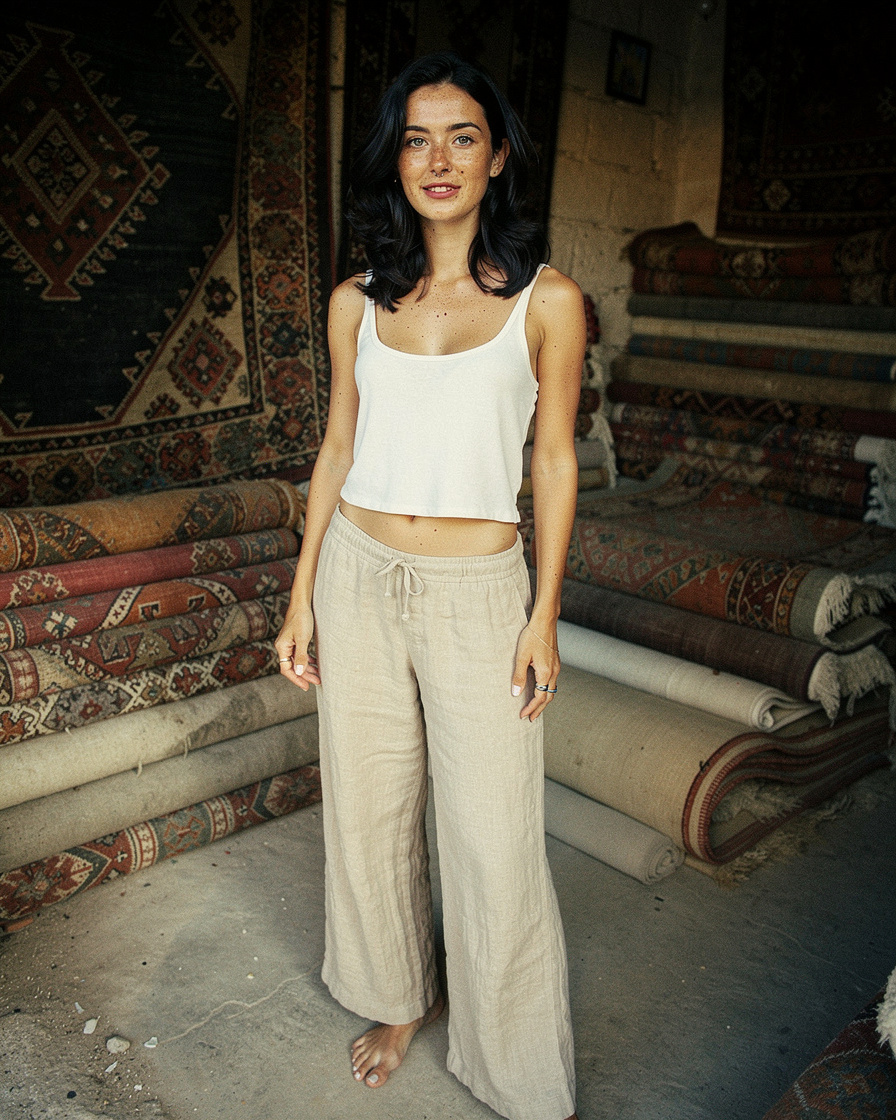
The shop is cool after the heat outside, the kind of cool that smells like wool and dust and something faintly sweet, maybe the tea already steeping before I've said a word. He doesn't ask what I want. He just starts. First kilim, red and diamond patterned, thrown flat across the stone floor with a snap of the wrist that suggests he's done this ten thousand times. Then another. Then another.
No mention of money. Not yet. That's the part I keep noticing here, how the ritual comes first, the transaction second, if at all. Tea glass in my hand, thin waist of glass, sugar cube dissolving slow. He talks about the wool, where it's from, which valley, whose hands dyed it. I understand maybe half. It doesn't matter. The rhythm of the unrolling says more than the words do.
Light comes through the doorway at an angle, catching the dust that rises every time a new carpet hits the floor. It hangs there, suspended, like it's in no rush either. Devagar. I think of my nonna's hands doing something similar with linen, decades and a different country away, the same unhurried competence. Funny how a gesture can travel that far and still look familiar.
By the fourth kilim I've stopped counting. He knows I'm not buying, or maybe he doesn't care, or maybe not buying was never really the point of any of this. The tea is finished. The floor is a small museum now, geometry after geometry, reds bleeding into rust, blues gone almost black in the shade. I ask about one, just to ask. He tells me its village. He tells me its age. He does not tell me its price.
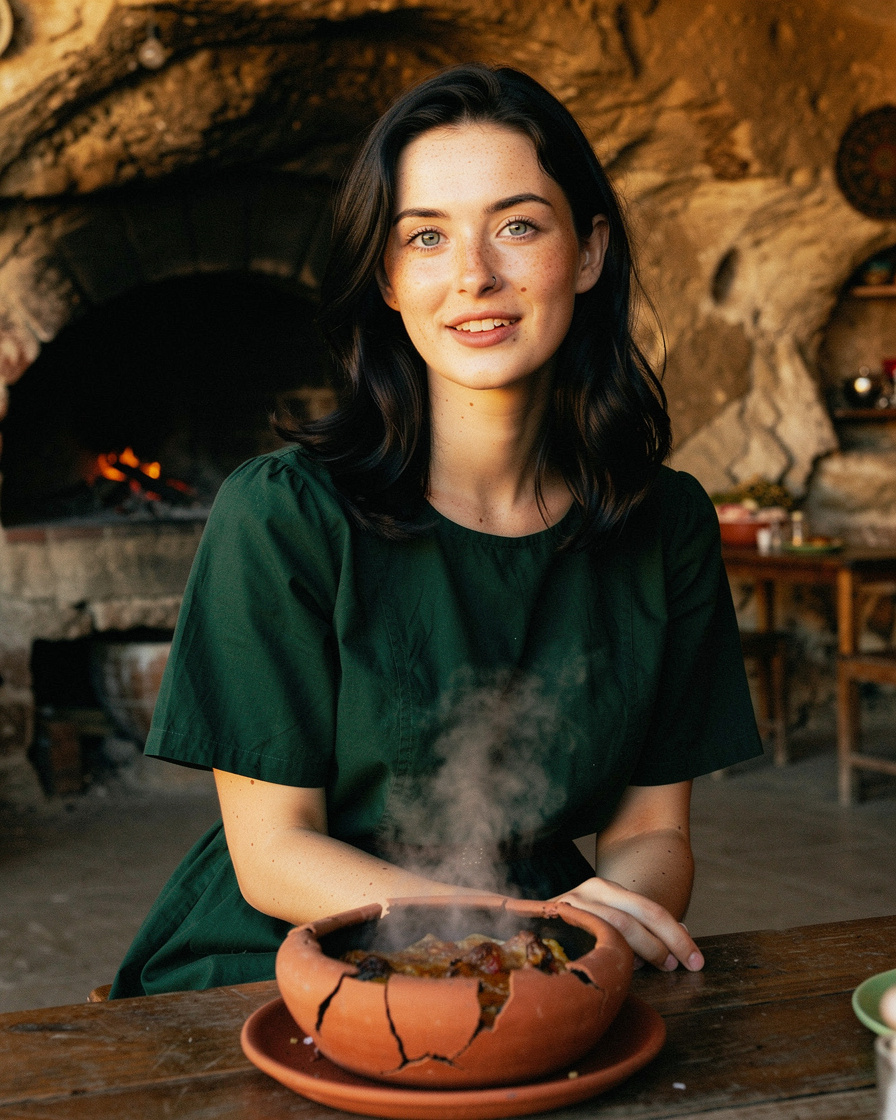
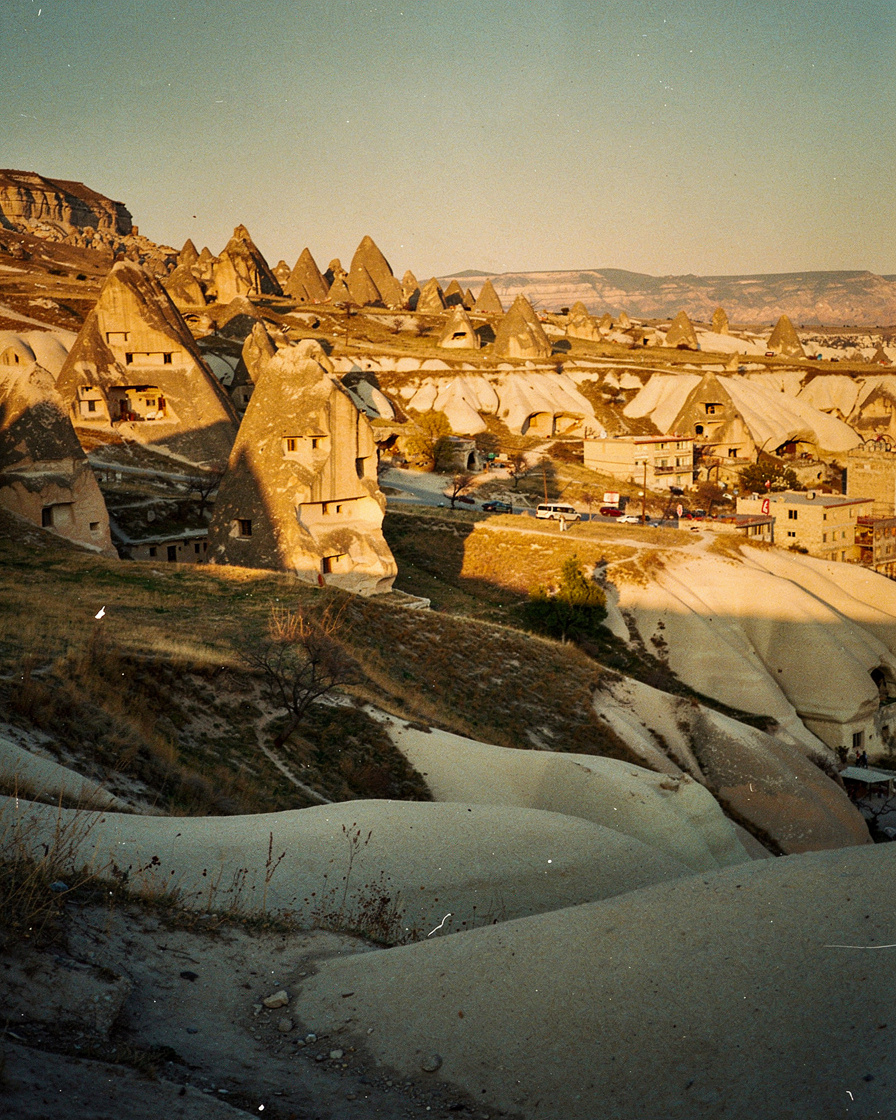
Outside, Goreme keeps doing whatever Goreme does at 13:36, tour buses idling, someone selling simit from a cart. In here, time moves differently. Slower, or maybe just more honest about how long things actually take. My camera sits in my lap the whole time, untouched. Some rooms don't need documenting. They need sitting in.