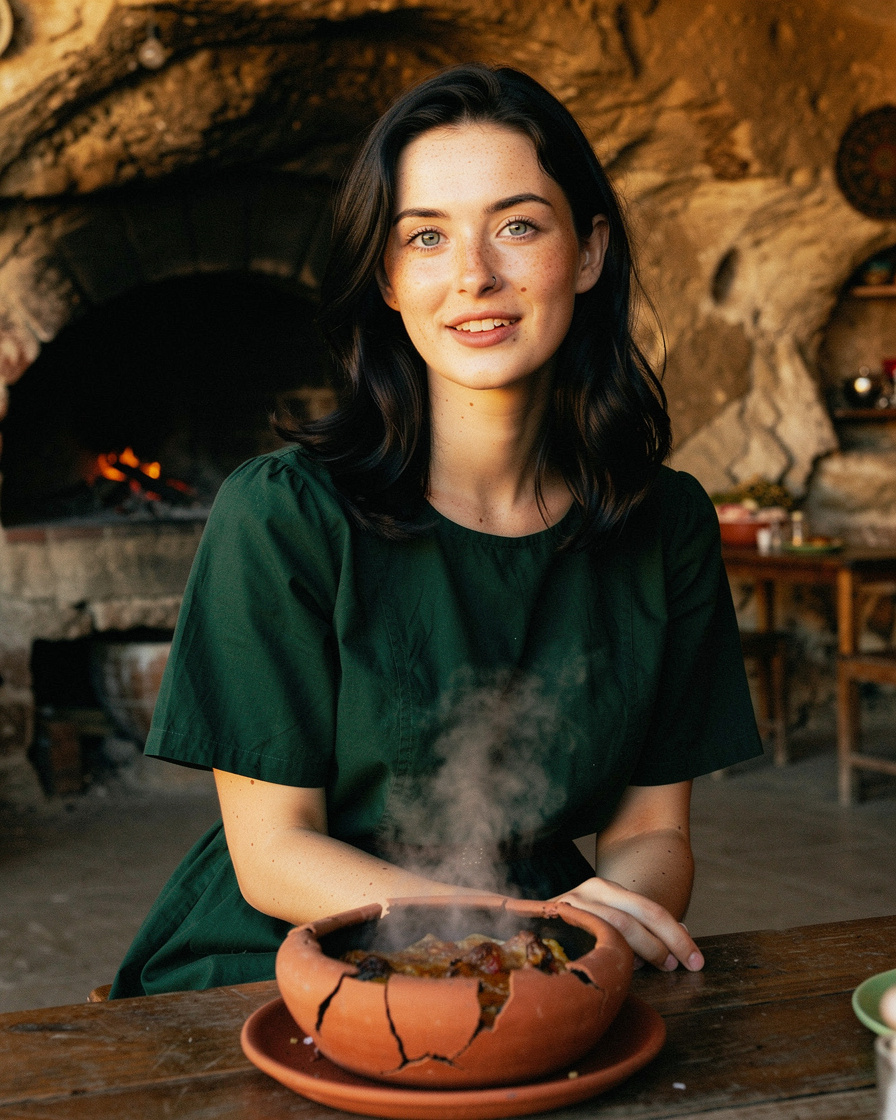
The pot arrives sealed, dark clay, still hissing faintly from the oven. Nobody rushes this part. The waiter sets it down, taps the neck twice with a small metal hammer, and on the third hit it gives, a clean crack, and the steam comes up all at once. Lamb, thyme, something sweeter underneath, maybe the onions that have been breaking down in there since morning.
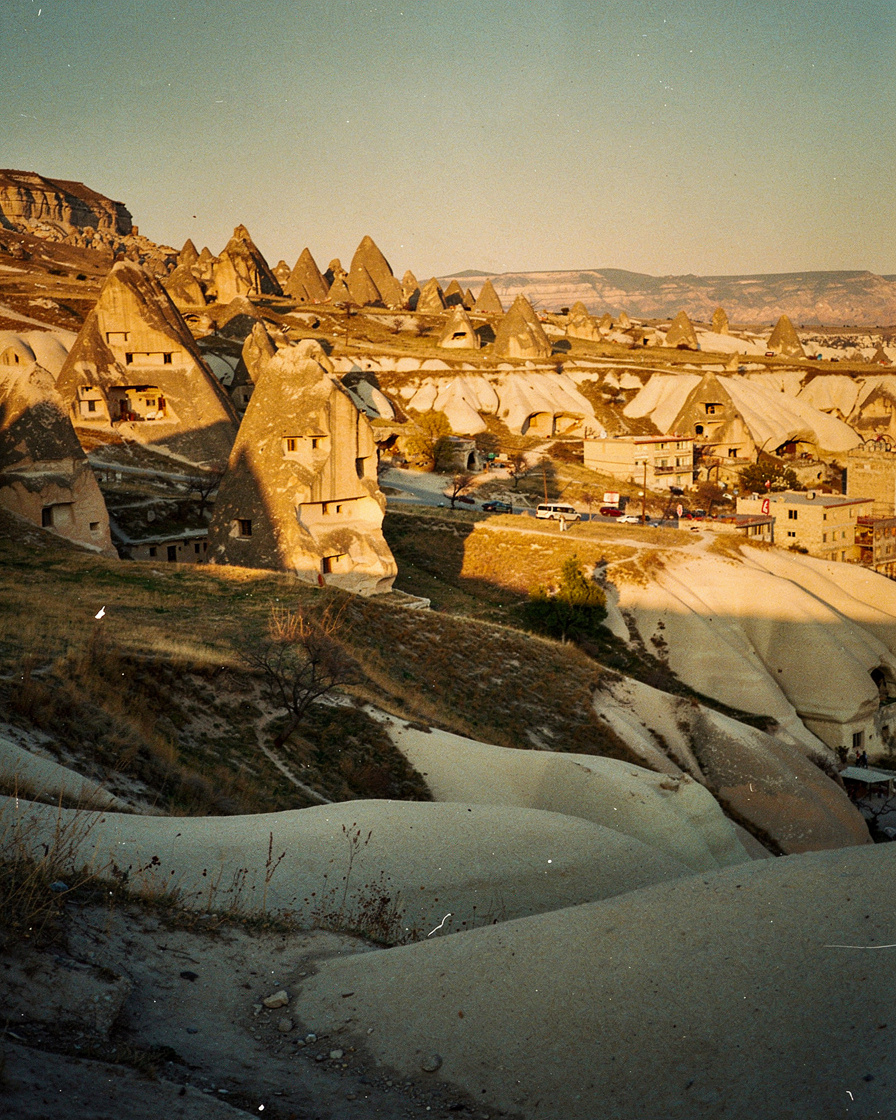
The restaurant is carved into rock, low ceiling, the kind of place where the walls still hold the day's heat. Outside it is nearly dark, 19:11 and the light over the valley has gone the color of weak tea. Inside, one oil lamp per table, and the smell of woodsmoke that has probably lived in these walls for decades, longer than the restaurant itself.
I think about how much of travel is waiting for someone else's patience to pay off. The cook who sealed this pot did not know I was coming. The clay did not know either. It just sat in the ash and did what clay does, slow, unbothered, no interest in my schedule. Devagar. There is a lesson in there somewhere about food and about everything else, but I am too busy eating to write it down properly.
My camera sits on the table, untouched for the first ten minutes. Some smells are not for photographing. Later I take one frame, off-center, the broken clay neck and the steam catching the lamp light, nothing else in focus. It will not explain the smell. It never does. But it will remind me, next time I am somewhere cold and rushed, that there was an evening in a cave in Cappadocia where dinner took four hours to make and four minutes to eat, and both parts were the point.