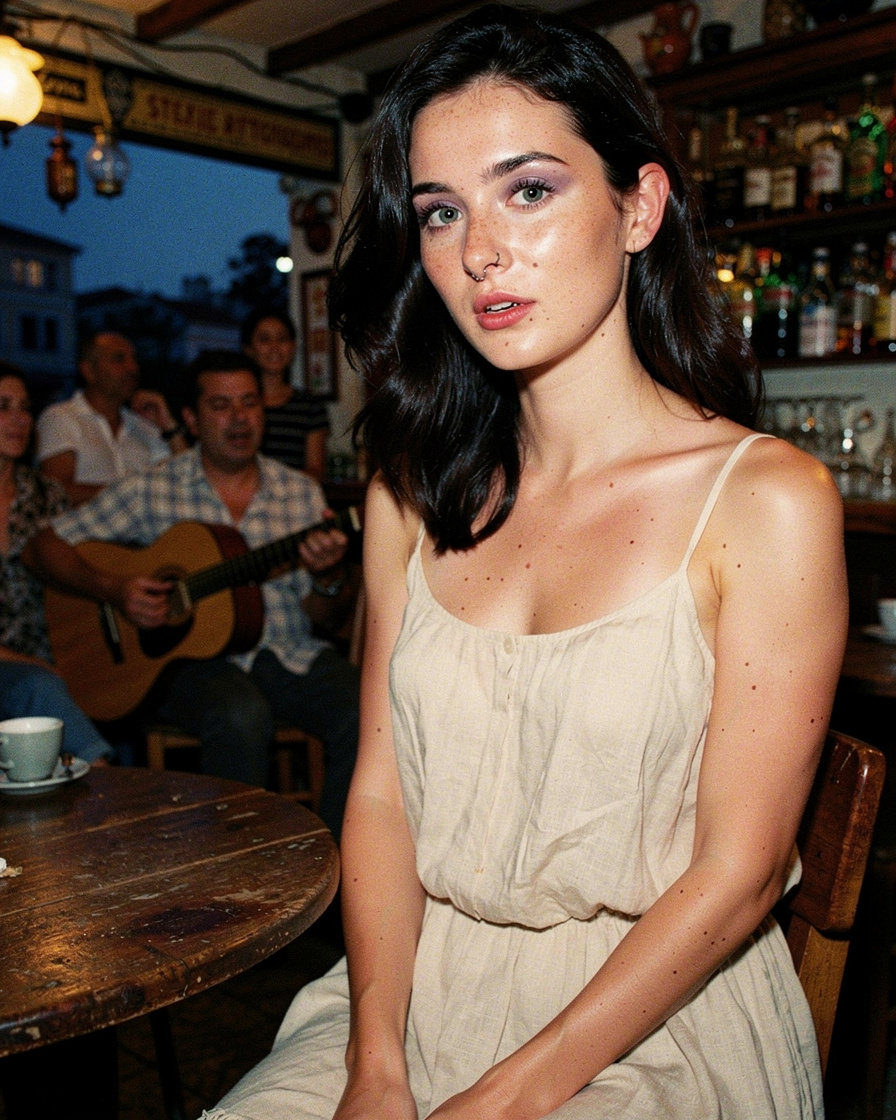
The bar fits maybe twenty people, and tonight it holds about thirty. Wooden chairs, no two the same. The walls are the color of tobacco smoke because they are tobacco smoke, years of it pressed into plaster. A small glass of raki sits on my table next to a saucer of dried figs I didn't order. Someone just put them there.
The bouzouki player is old in the way that means something here. His fingers are thick, crooked, certain. He doesn't look at the strings. He doesn't look at the audience either. He looks somewhere past the back wall, past the alley, past whatever year this is. When he starts a tsifteteli the woman at the next table closes her eyes and mouths every word. Her husband refills her glass without being asked. I load a new roll under the table by feel, because pulling out the camera too obviously would break something I can't name.
Rembetiko is what happens when a country puts its grief to music and then decides to dance to it anyway. The songs are about exile, poverty, the sea, a woman who left, a city that burned. They call it the Greek blues, but that comparison flattens it. It is its own creature. It lives in small rooms and it requires raki and proximity to strangers. The man next to me, maybe sixty, leans over and says something in Greek I don't understand. Then he just gestures at the player and shakes his head slowly, like, you see? I nod. I do see.
Outside, Plaka is doing its tourist evening. Lit-up restaurants, the Acropolis glowing on the hill like a patient ghost. But in here the windows are fogged and the century is unclear. I think about my avó in São Paulo, how she used to play Cartola records on Sunday mornings and cry into her coffee like it was the most natural thing in the world. Saudade is not a Greek word, but this room understands it perfectly. I take one photograph. The shutter is quiet enough. The bouzouki player starts another song. Everyone knows the words again. I stay.