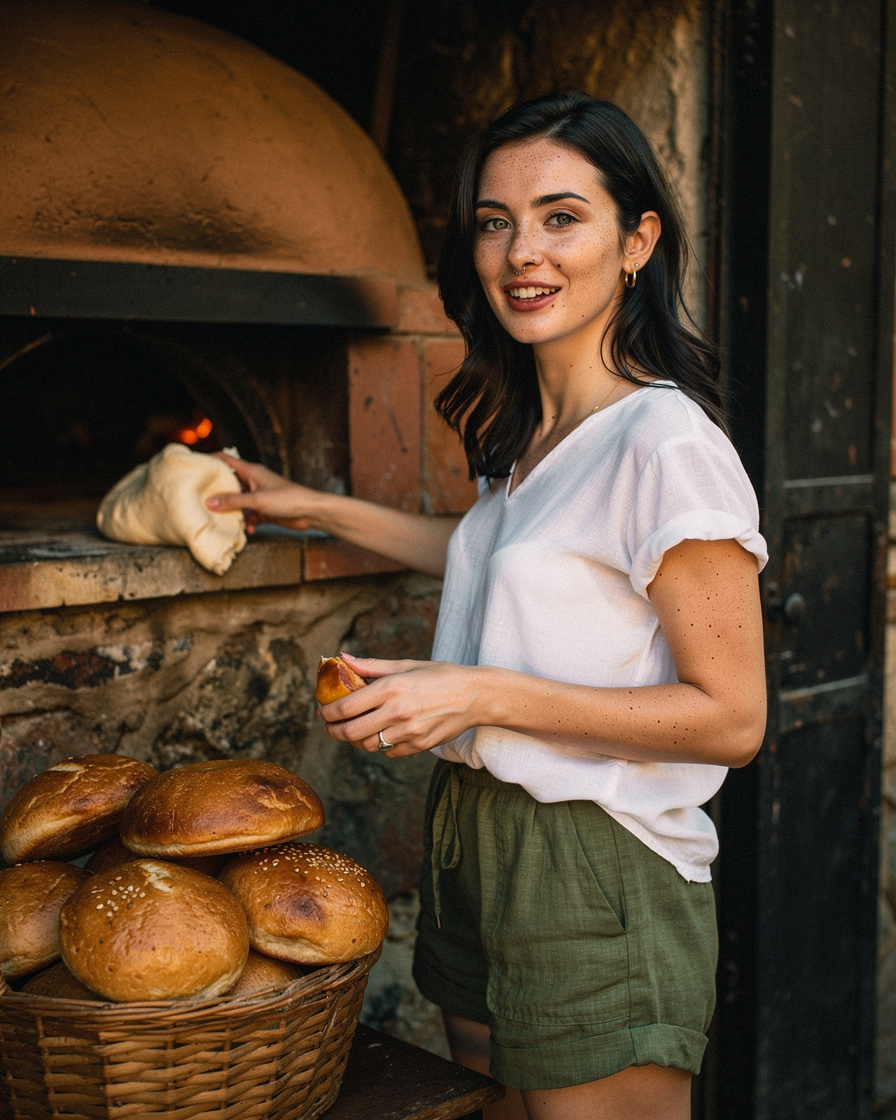
The oven is called a tone, clay, sunk into the floor like a well. By 07:36 it is already roaring. The baker doesn't wear gloves. He leans in, one arm deep into the heat, and slaps the dough flat against the inside wall. It sticks. It stays. That's the trick, apparently, sticking before falling.
The shape of shoti is strange until you see why: long, boat-like, pointed at both ends, built to hang from a hook or lean against the curve of the oven. Nobody explains this to me. I just watch it happen four times, five times, until the logic sinks in on its own.
The room smells like scorched flour and woodsmoke. There's a basket by the door filling with loaves, stacked the way you'd stack firewood. A woman comes in, points at two, doesn't speak, leaves coins on the counter. This has clearly happened every morning of her life. I am the only one filming anything.
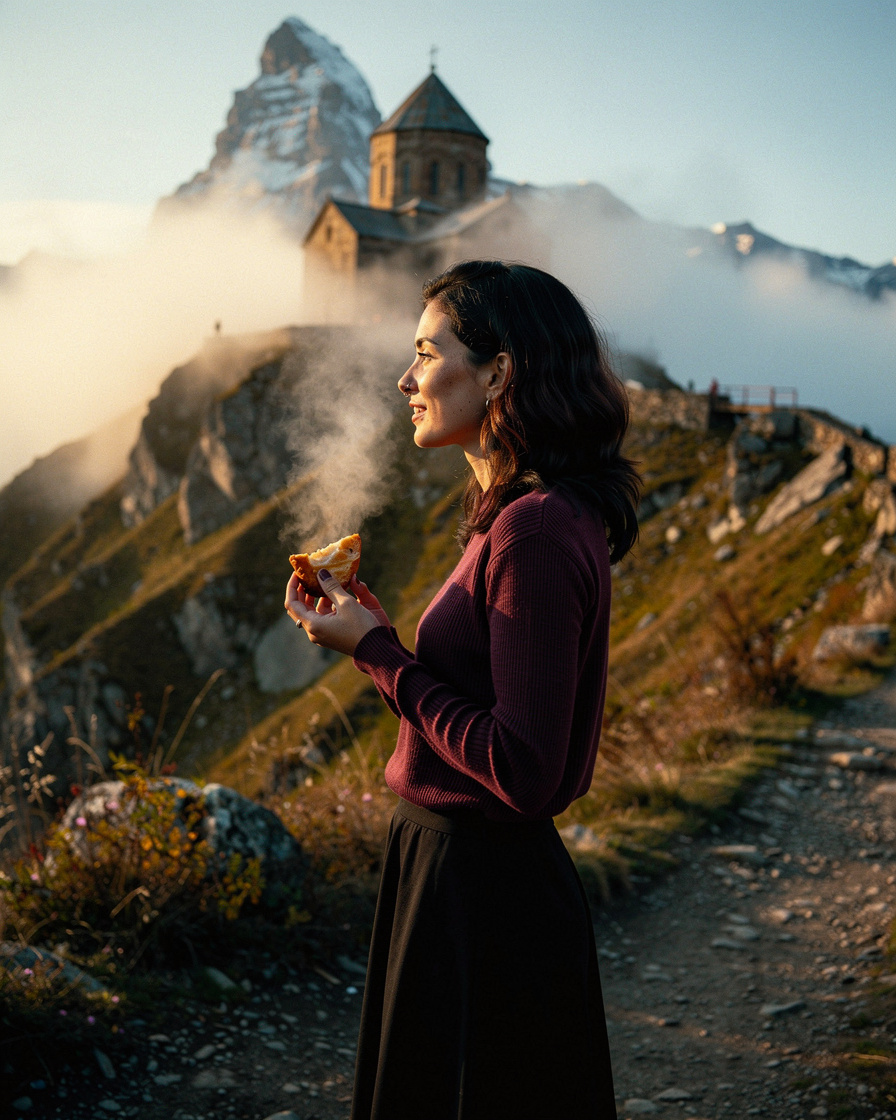
I buy one loaf still too hot to hold properly, shift it hand to hand like a hot coal, tear off the end anyway. Inside it's soft, almost sweet, the crust blistered and dark in patches where it kissed the clay too long. Tbilisi at this hour is quiet outside, just the trolleybus cables humming somewhere behind me, but in here it's all heat and repetition, dough into fire, dough into fire, a rhythm that doesn't need me to understand it to keep going.