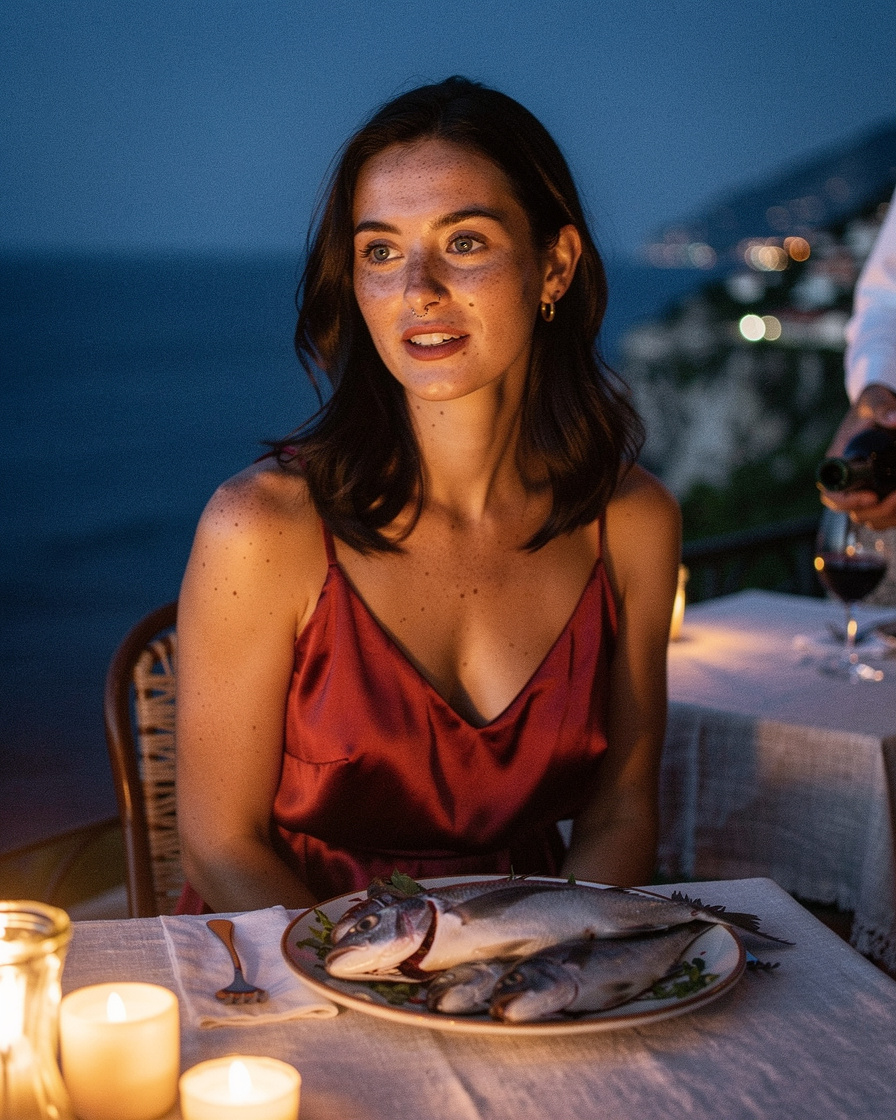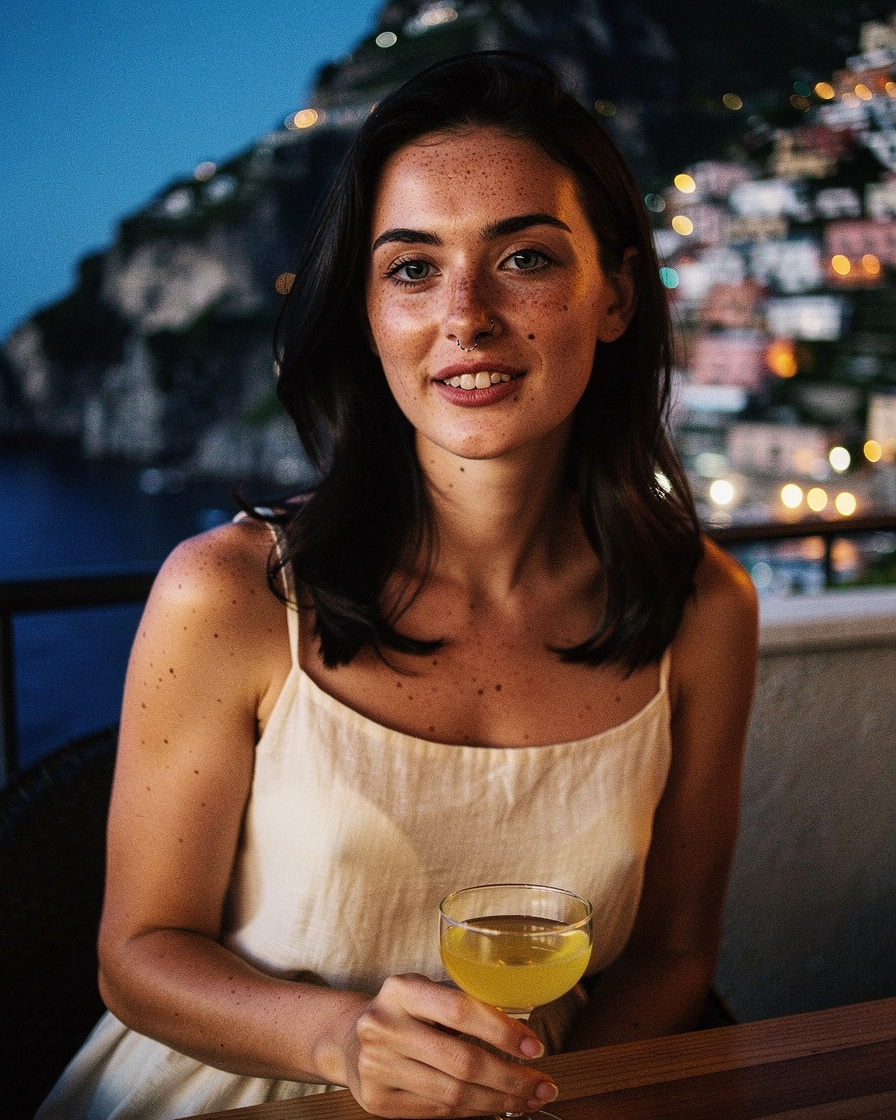
The waiter set the glass down without a word. He already knew. After a meal like that, on a terrace like this, there is only one thing left to do. You sit. You drink something cold and impossibly yellow. You let the night settle over you like a linen sheet.
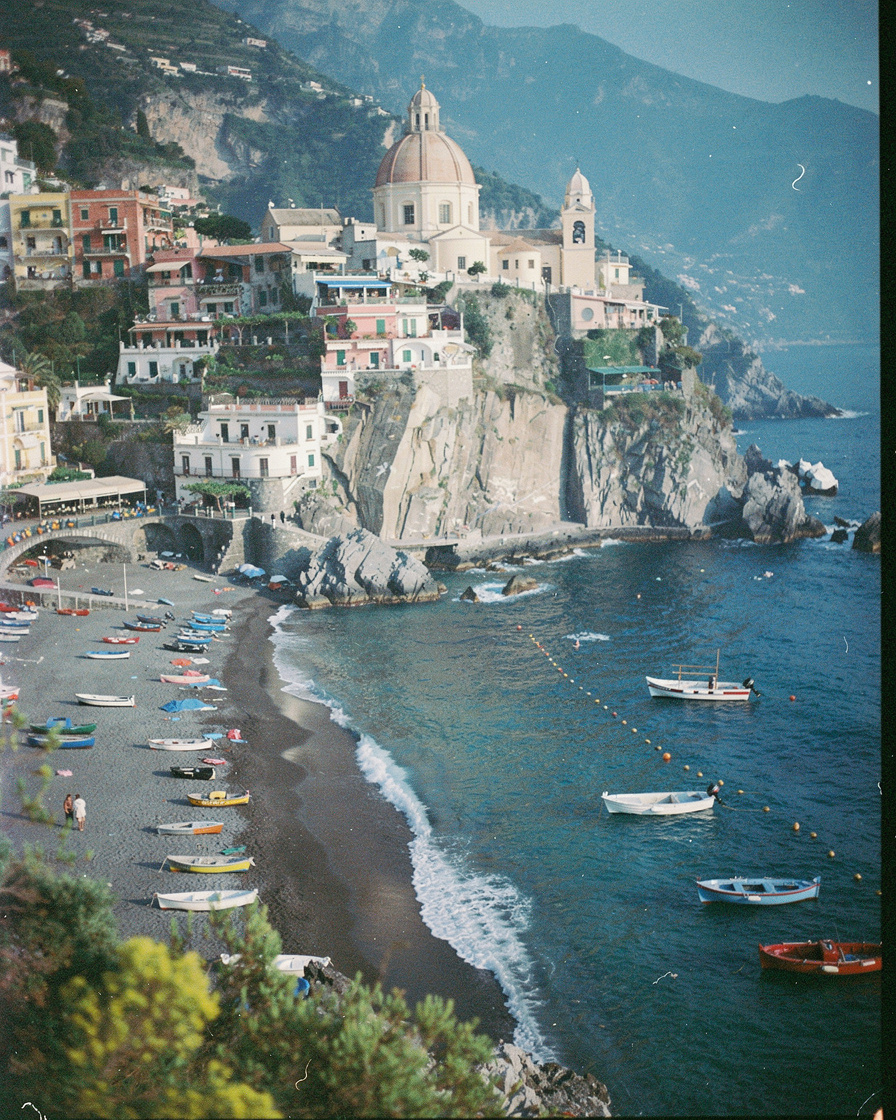
The Amalfi Coast after dark is a different animal than the one the daytrippers know. The buses are gone. The souvenir shops have pulled their shutters. What remains is the sound of water far below, a motorino somewhere up the hill winding through a turn, and the faint clink of glasses from a terrace you cannot see but know is there. The villages cling to the cliffs like they always have, lit now in warm clusters. Positano. Praiano. Furore, maybe, if you squint. They look like someone scattered a handful of candles across a dark wall and walked away.
The limoncello is so cold the glass fogs the second it meets the air. It tastes the way lemon peel smells when you twist it, sweet and bitter holding hands. My father used to keep a bottle in the freezer at the apartment in Milan. He would pour two after Sunday lunch, one for himself and one for my mother, who would take a single sip and leave the rest. I always thought that was wasteful. Now I think she just liked the ritual more than the drink. I get it now.
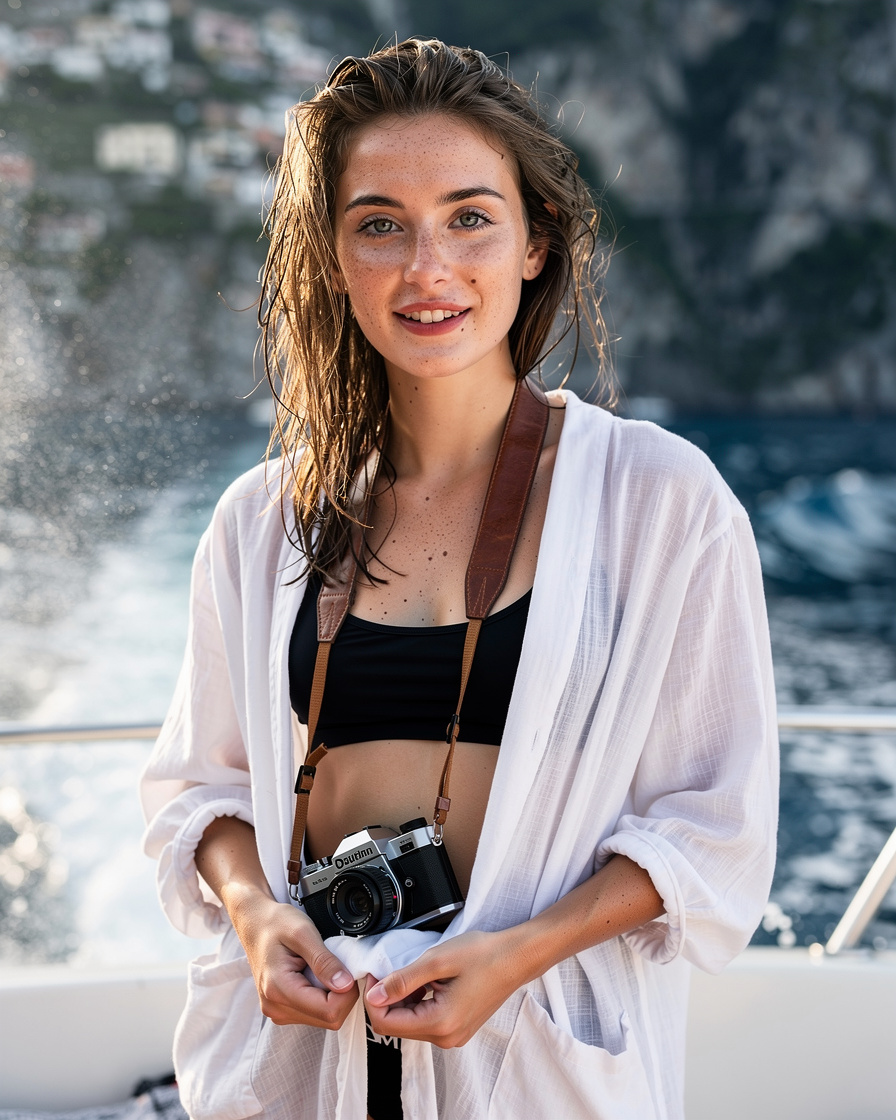
I set the Leica on the table next to the glass. The film inside is nearly done, three or four frames left. I could shoot the lights on the water, the condensation on the glass, the curl of a lemon rind left on the plate. But sometimes the camera is better as a witness than a participant. It sits there, cool metal, watching the same view I am. Neither of us in a hurry. The check will come when it comes. The night is long here, and nobody is counting.