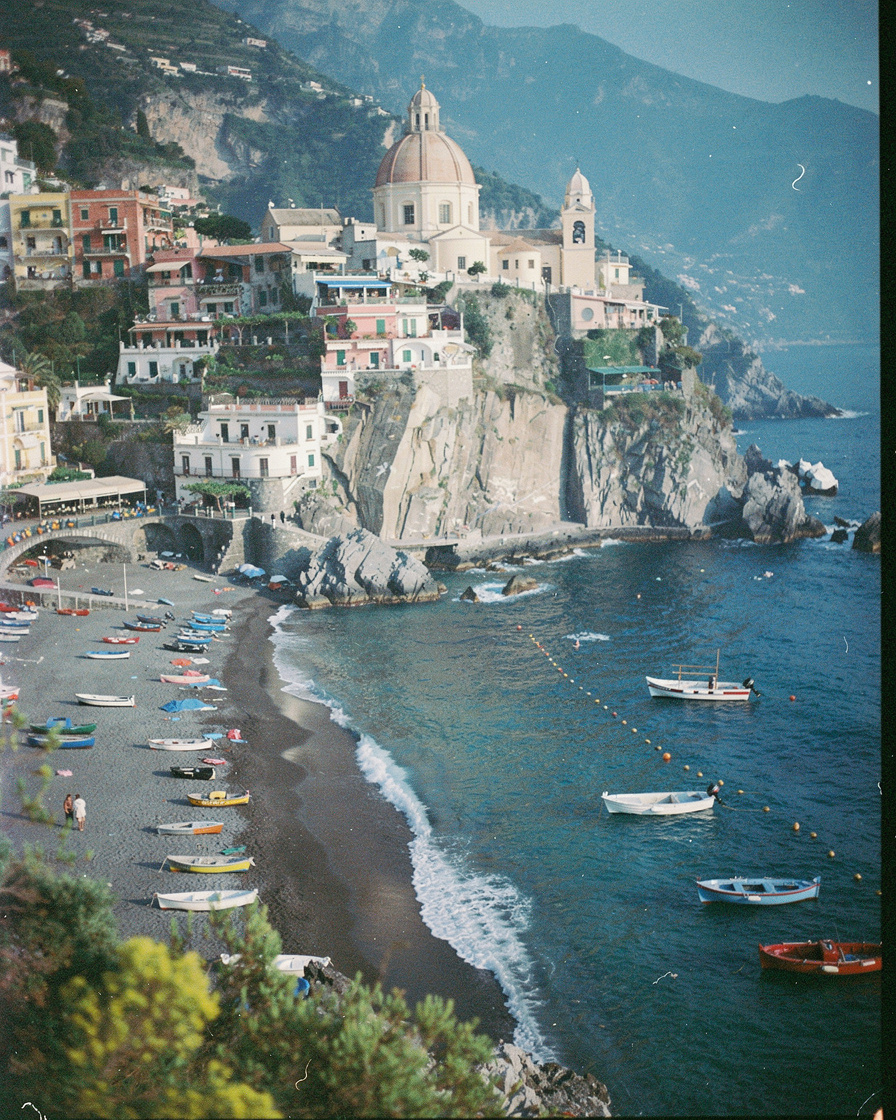
The boat is small. Room for maybe eight people but it's just me and the driver, who hasn't said a word since we left the dock. Fine by me. Positano is shrinking behind us, its pastel stack becoming a watercolor of itself, and ahead the cliffs are doing that thing where the morning sun finds every fold and crevice in the limestone. The water is so blue it looks fake. It isn't.
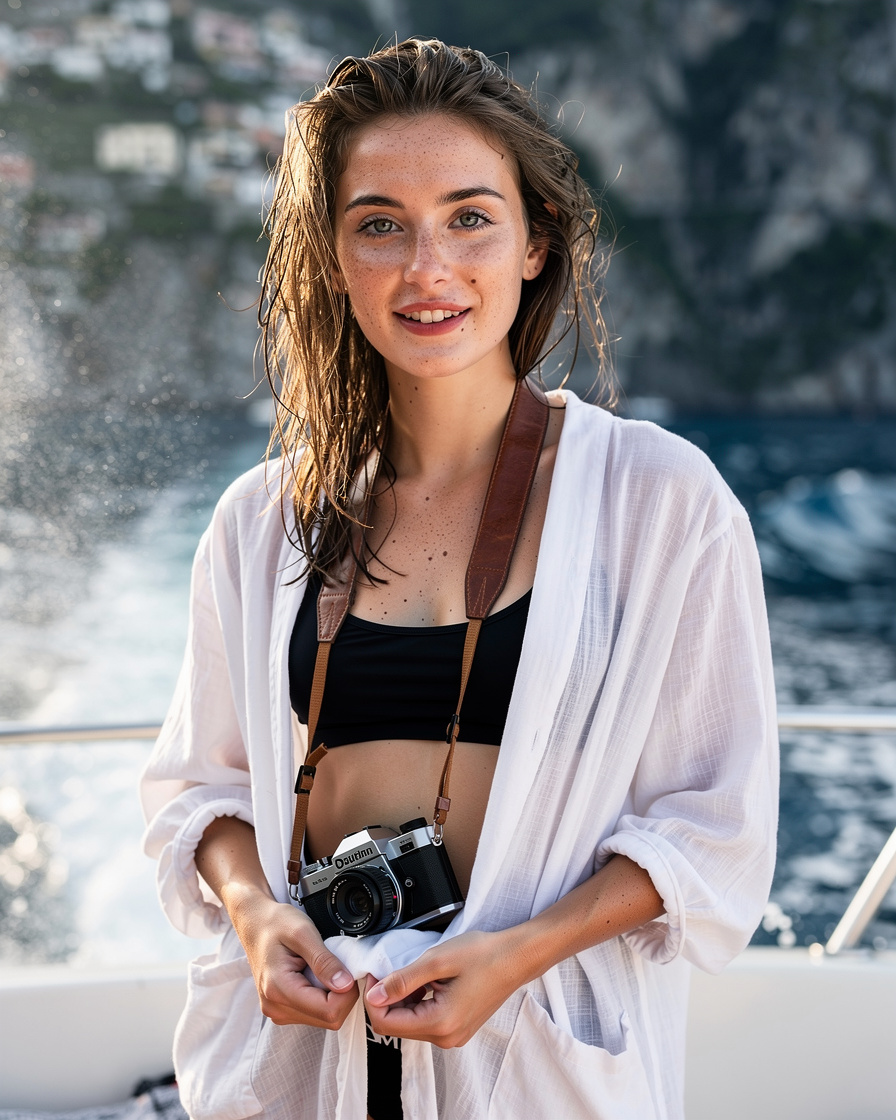
My hair is soaked. Not from rain, just from the spray that comes over the bow every time we cut across a swell. I can taste salt on my lips and feel it drying tight on my forearms. The camera is bundled inside my linen shirt on my lap, and I'm holding it the way you hold something you can't afford to replace. Which I can't. Every few seconds I think about unwrapping it, shooting the cliffs, the light, the driver's sunburned hands on the wheel. But the sea is unpredictable this morning and I'd rather lose the shot than lose the lens.
There's a particular silence that happens on water. Not actual silence. The engine hums, the hull slaps, the wind fills your ears. But your mind goes quiet. I keep thinking about my father, how he used to say the Tyrrhenian Sea was the only body of water that smelled like home to him. I never understood that until now. It smells like salt and diesel and limestone warming in the sun, and underneath all of it something green and ancient, like the rocks themselves are breathing.
We round a headland and Amalfi appears. The cathedral dome, the tight cluster of buildings climbing the ravine, fishing boats already out. The driver finally speaks. Cinque minuti. I nod. I don't unwrap the camera. Some mornings you just let your eyes do the work and trust that they'll remember what the film would have caught. The spray hits my face again and I close my eyes and I am nowhere and everywhere and completely, stupidly here.