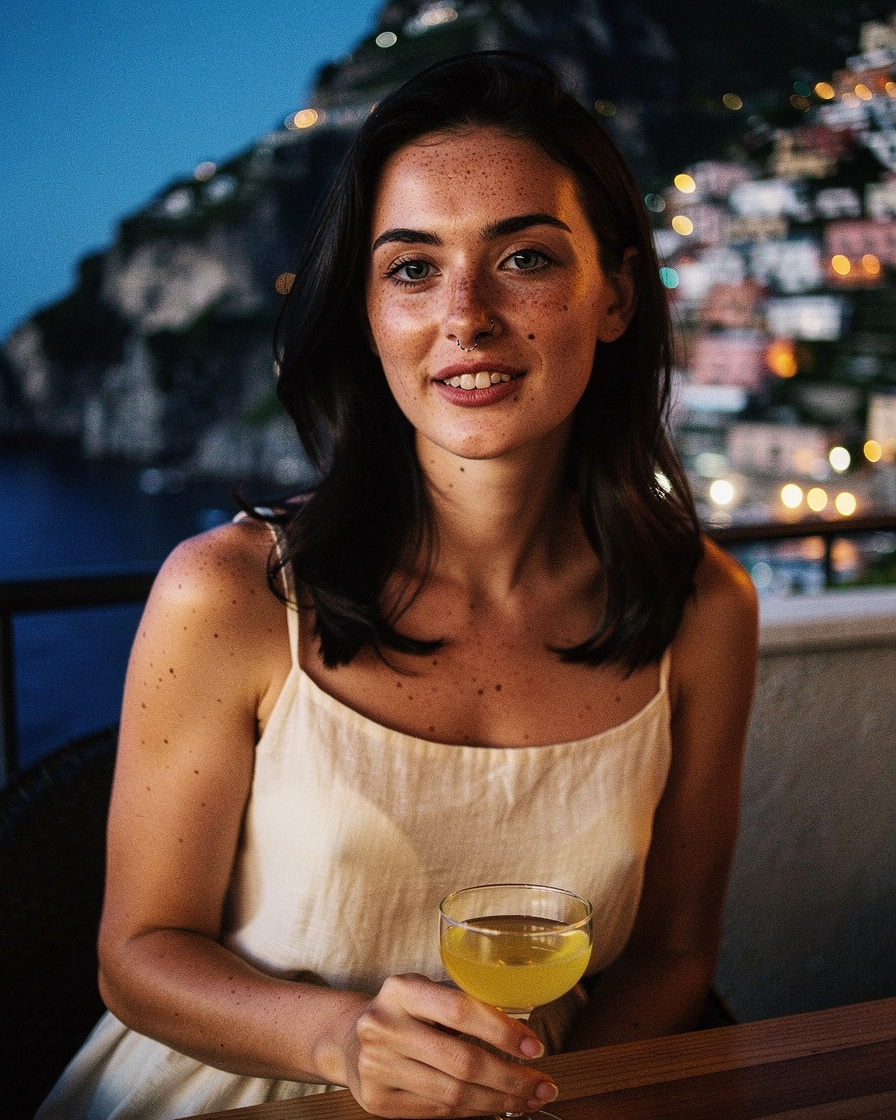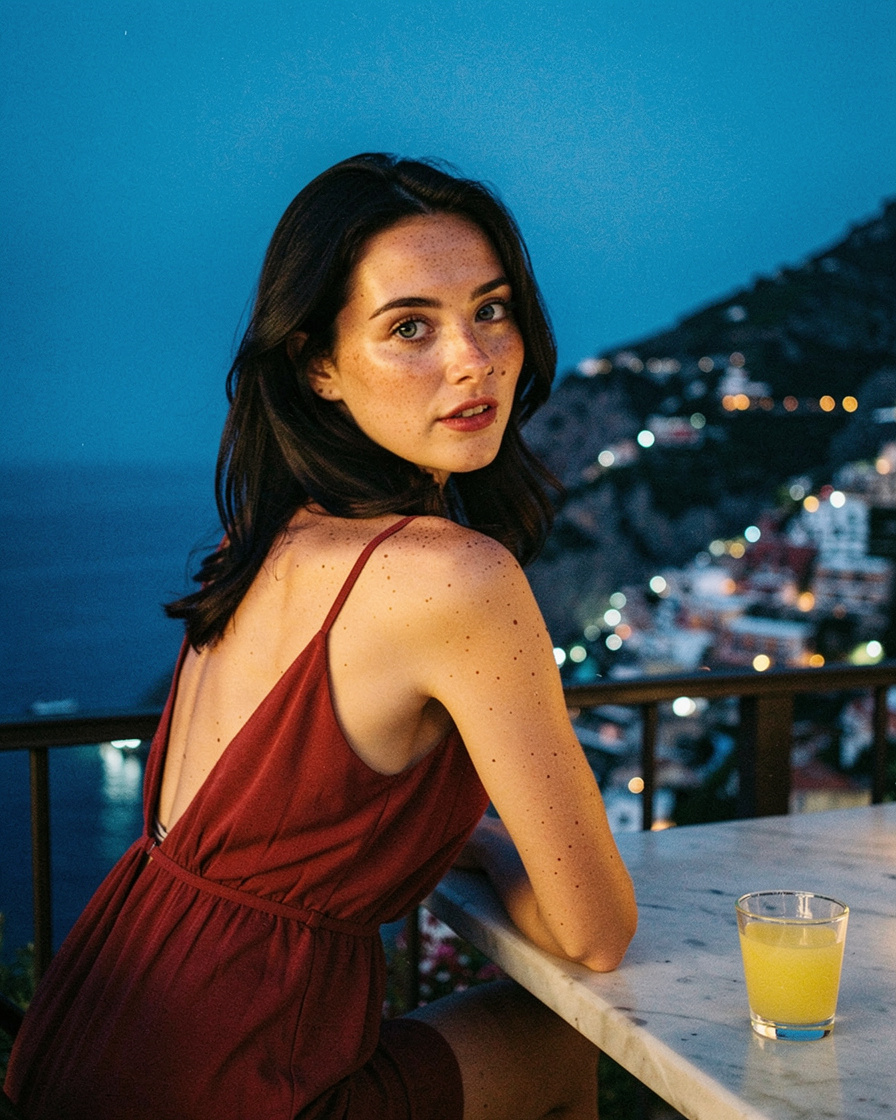
The glass is cold and almost too small to hold properly. Two fingers, maybe three. The limoncello is the thick, syrupy kind they only make here, where the lemons are the size of a child's head and the rind smells like it could wake you from a long sleep. I take a sip and it hits both ways. Sweet first, then that sharp citrus bite at the back of the throat. I set the glass on the stone ledge and leave my hand there. The stone is still faintly warm from the day.
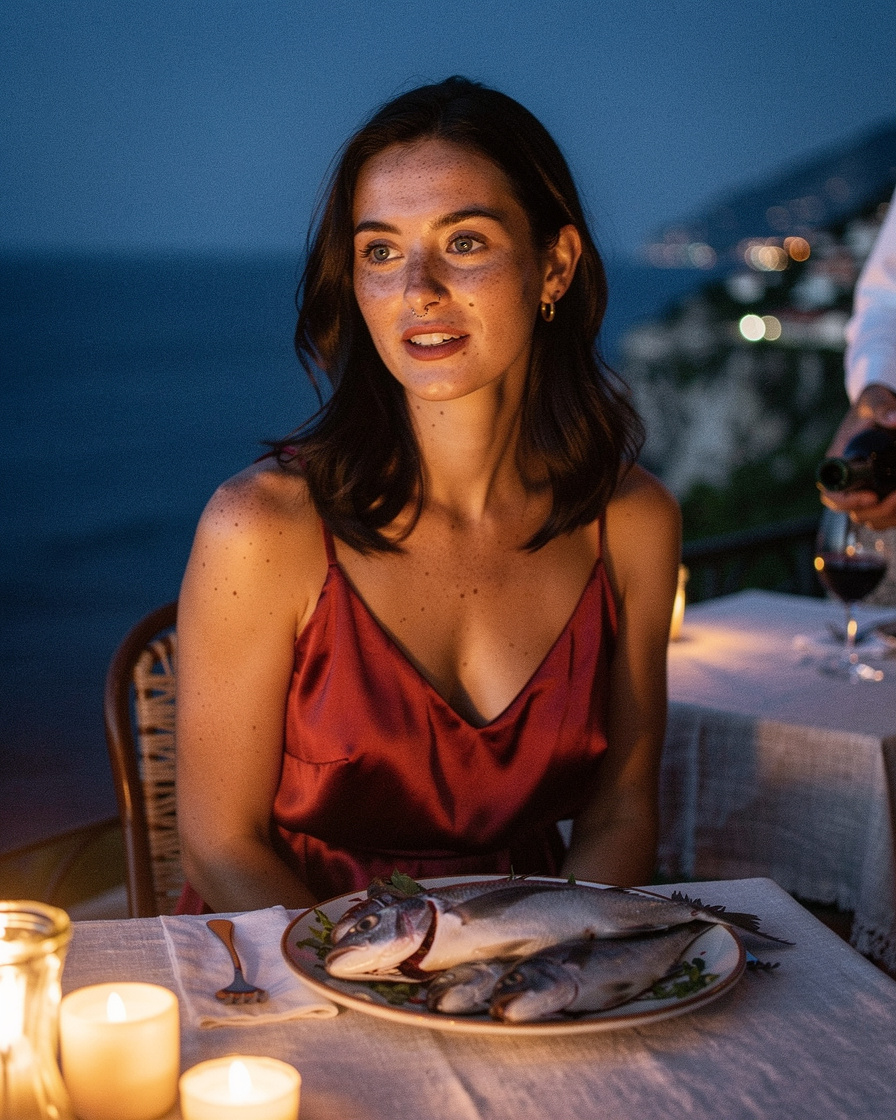
From the terrace I can see Praiano, or maybe Furore. I'm not sure anymore. The villages are just clusters of amber light pressed into the rock face, and below them the sea is invisible, only audible. A low, rhythmic pull against the base of the cliffs. Someone in the kitchen behind me is laughing. Plates clink. A motorbike whines up the road somewhere above, its sound curving with the switchback before disappearing.
I think about my father. He never came south much. Milan was his world, and he talked about the Amalfi Coast the way Milanese people do, with affection and a little suspicion, like it might be too beautiful to be serious. But there is something serious here. The terraces cut into the hillside, the lemon groves held up by stone walls older than anyone alive. People built this landscape by hand, generation after generation, and now it glows in the dark like a postcard. That tension interests me. The labor behind the beauty. The ordinary machinery of a place that looks, from a distance, like pure fantasy.
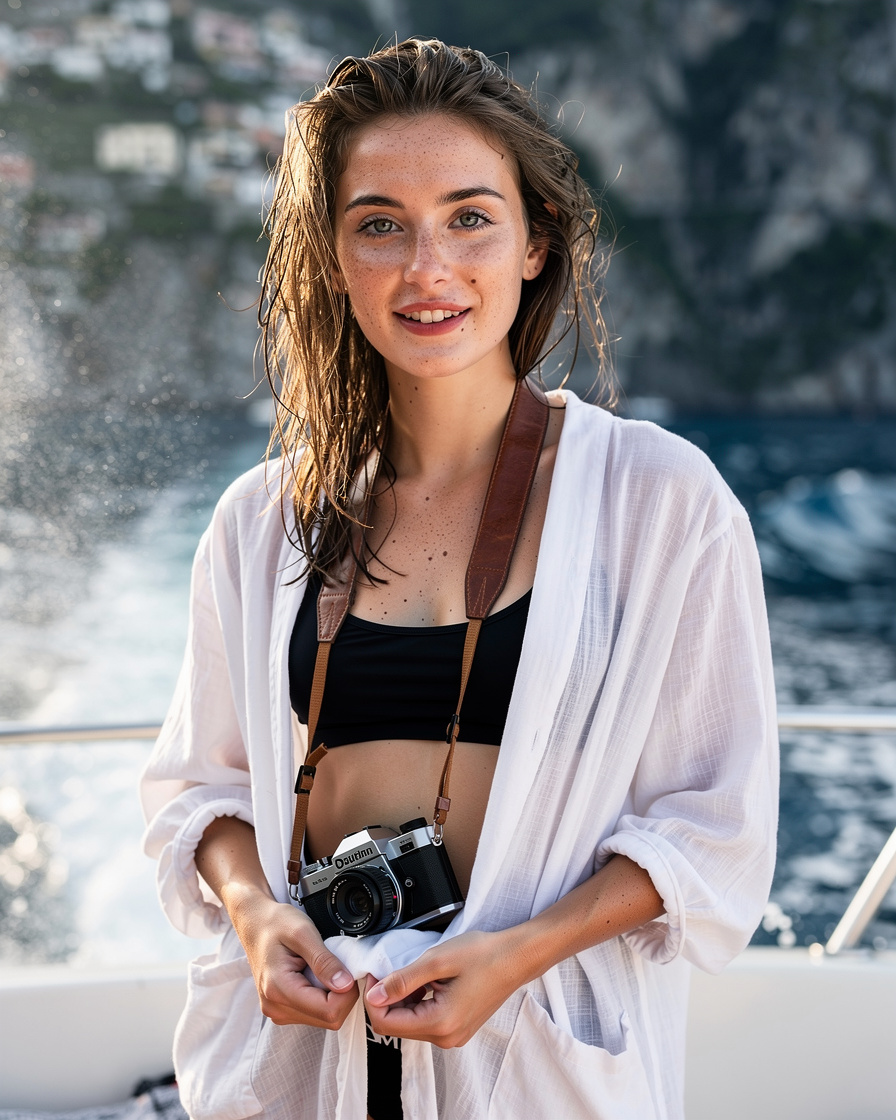
The film camera sits on the chair next to me, lens cap on. I thought about shooting the lights but decided against it. Some things are better unrecorded. The limoncello is almost gone. The night is warm and smells like salt and lemon leaf and the last trace of someone's cigarette. I'll sit here a while longer. No reason to move. No reason at all.