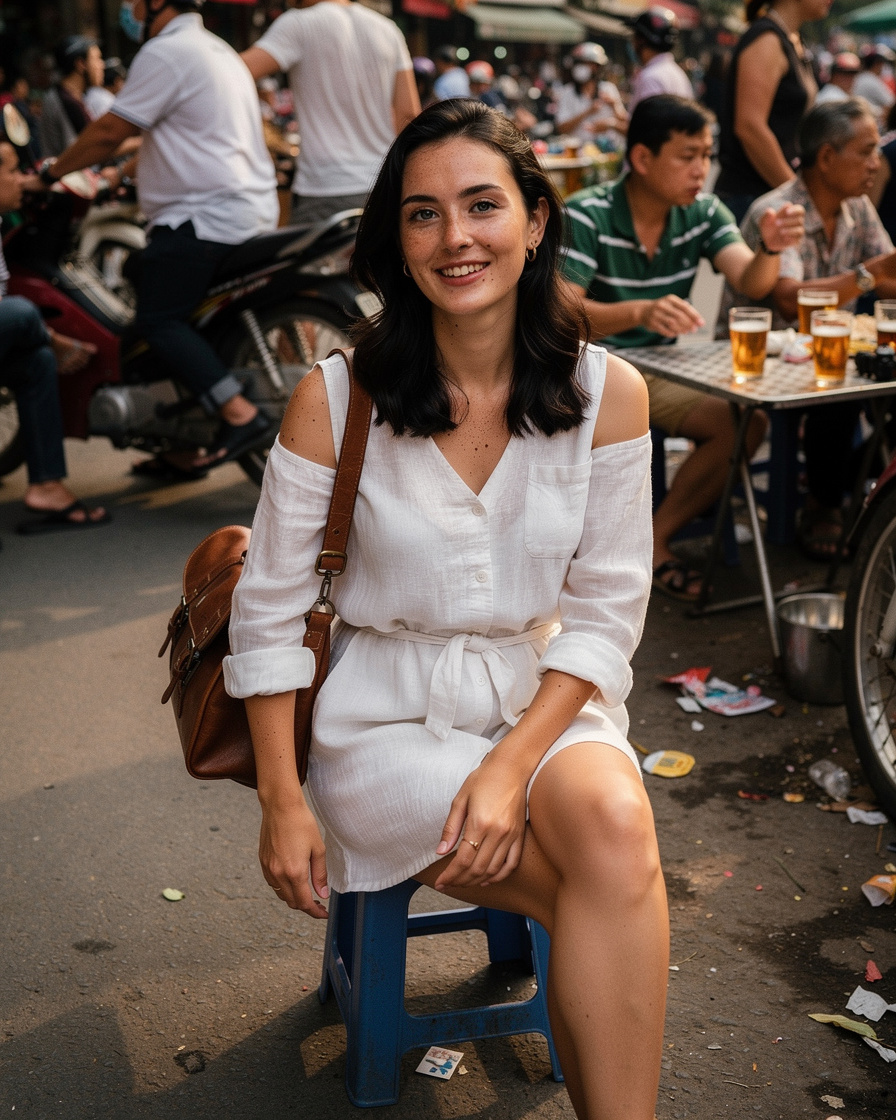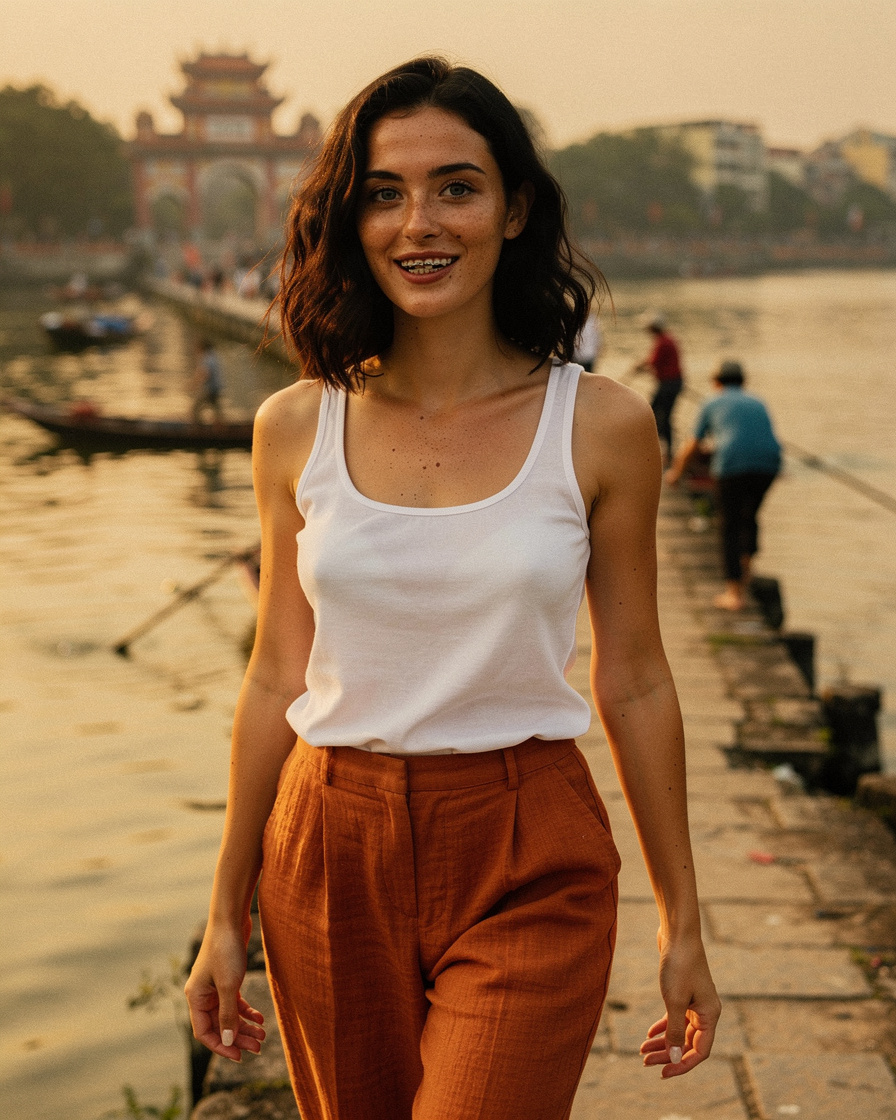
Seven fifty-three and the street still belongs to no one. That's the hour I like, before the motorbikes multiply and the old quarter remembers it's a market. Hang Khoai smells like diesel and jasmine at the same time, which shouldn't work, but here it does.
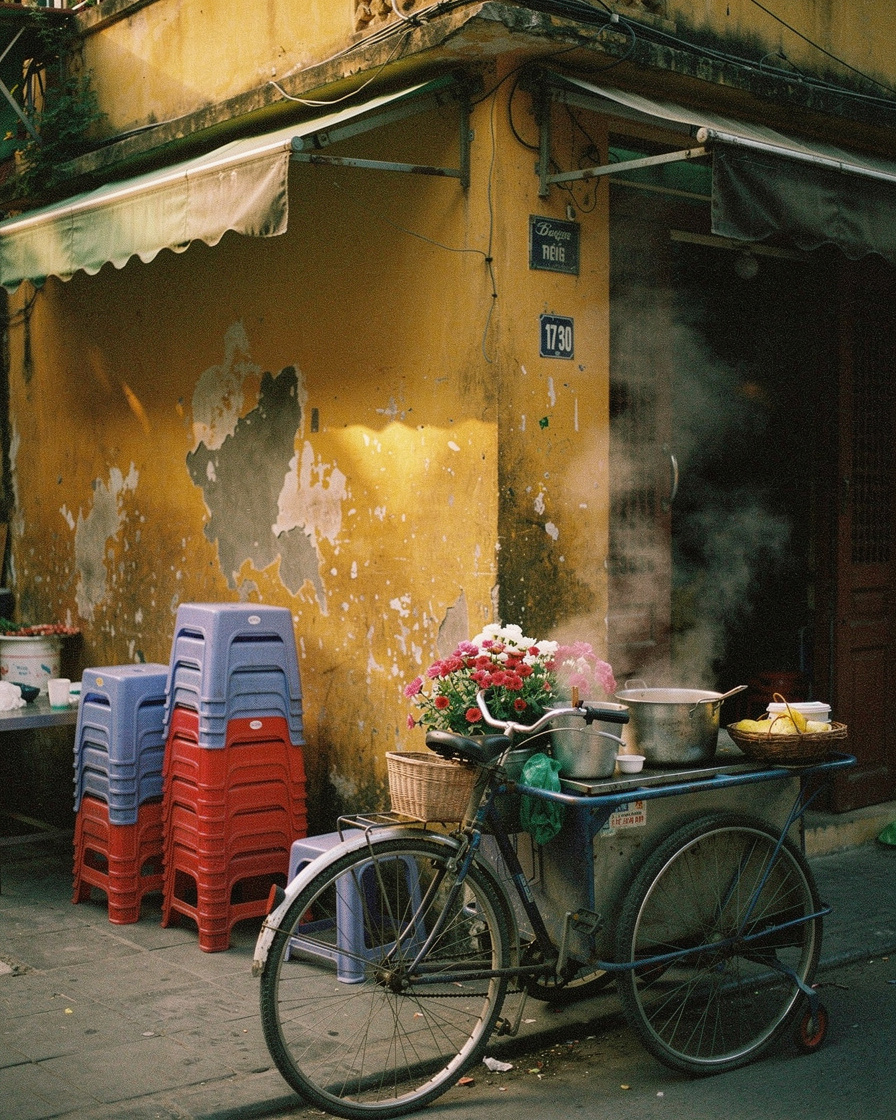
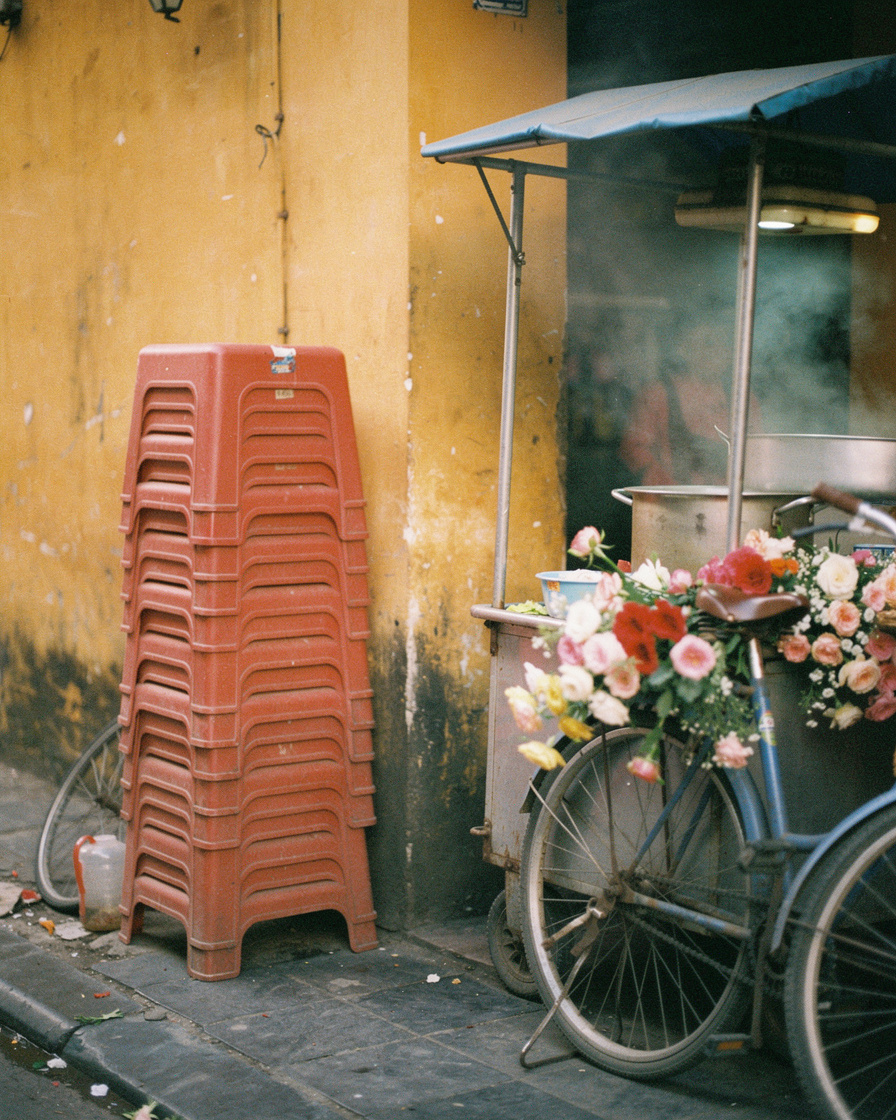
The bicycle is the first thing I see. Loaded with flowers, leaning against a doorway like it's been there since the war. No owner in sight. Someone will come for it. Someone always does. I've learned not to wait around for the person to arrive, the bicycle is the photograph.
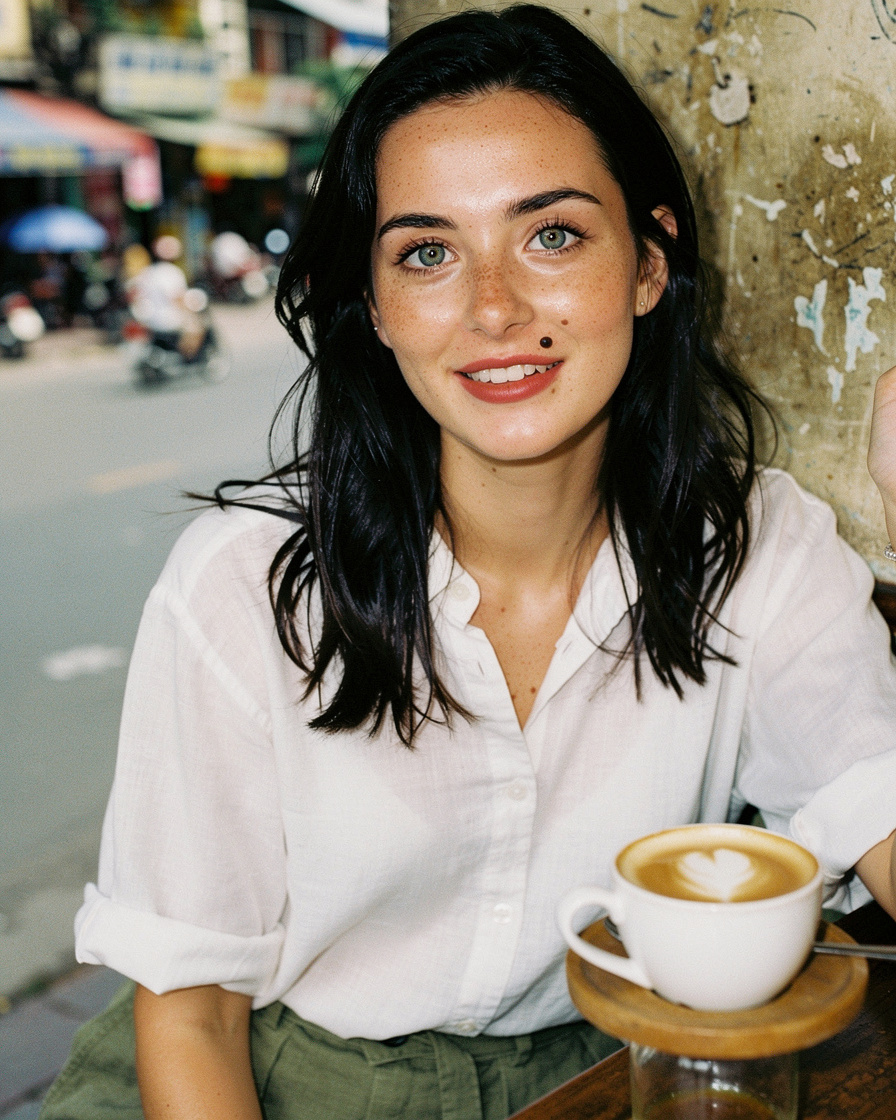
Further down, a pho cart lets off steam into air already thick enough to chew. Plastic stools stacked three high against a wall the color of turmeric, waiting for the first customers who will fold their knees too high for the furniture and not mind at all. I order coffee instead, condensed milk settling at the bottom like sediment, and I sit where the stools haven't been unstacked yet.
There's a particular kind of quiet in Hanoi at this hour, not silence, just a lower register. Bells on bicycles. A woman sweeping in front of her shop with a broom made of sticks. The city clearing its throat before the shouting starts. My camera sits in my lap, unused for a full ten minutes, which almost never happens.
I think about how every city has this window, this half hour where it hasn't decided yet what kind of day it's having. Milan has it. São Paulo has it, though you have to look harder. Hanoi wears it on its sleeve, ochre walls going gold, then just walls again once the sun clears the rooftops. By eight the stools will be full. The bicycle will be gone, pedaled off by someone selling peonies to shopkeepers two streets over. For now, it just leans there, patient, loaded, mine for exactly as long as I choose to look at it.
If you go: arrive before 7am, stand near the Hang Khoai flower corner, and order a cà phê sữa đá from the cart man who sets up by the wall.