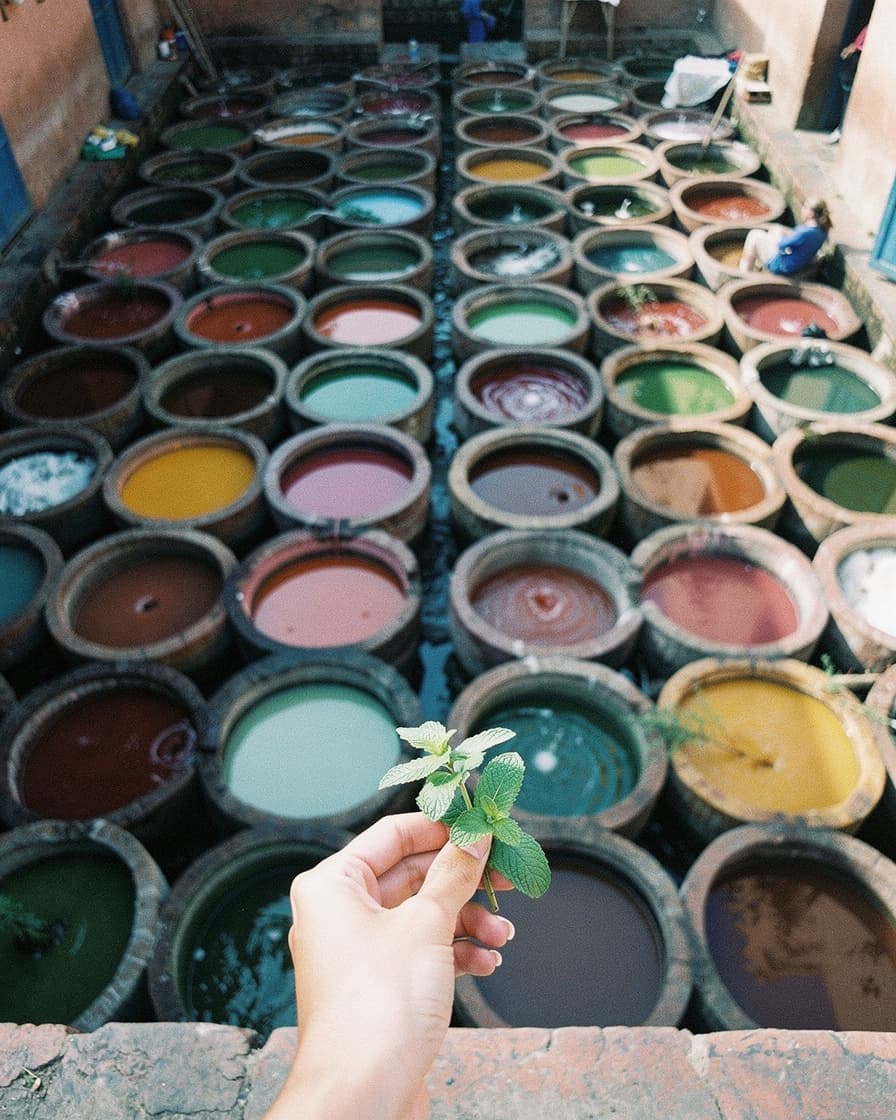
Five thirty. The tanneries wake up before the rest of the city bothers to. A man hands me mint at the door, presses it into my palm like a secret. I smile, say obrigada out of habit, and only understand a minute later. It is not a gift. It is a gas mask made of leaves.
Below, the vats open up in rings, stone pockmarks filled with color. Saffron yellow, a red that looks lifted from a butcher’s memory, indigo so deep it reads as black until the light hits it right. Men wade through them to their knees, turning hides with their bare hands, and no one looks up at me. Why would they. I am not the first person to stand on this ledge holding a camera like it means something.
The smell arrives in layers. First the ammonia, sharp enough to make my eyes water even through the mint. Then something underneath it, animal and old, pigeon droppings and lime used to strip the hides bare before the color ever touches them. My father would have hated this. My mother would have stayed for hours, asking questions in three languages until someone answered in one she understood.
I load the Leica slow, hands already smelling of mint and rot in a way that will not wash out until Tangier. There’s a rhythm to the work below, no wasted movement, generations of it. A boy, maybe twelve, hauls a hide twice his size onto the ledge to dry and doesn’t so much as glance at the tourists lining the rooftop. This is Tuesday for him. It is theater for us, and we both know it, and somehow that is fine.
The light does something around six that no filter has ever managed to fake, gold moving sideways across the vats, catching the wet leather so it glows like something molten. I take four frames. I know already only one will be worth developing. That is the deal with film. You do not get to check. You just trust the light did what you think it did, and you carry the mint the rest of the day, crushed in your pocket, releasing itself in small useless bursts every time your hand goes looking for something else.