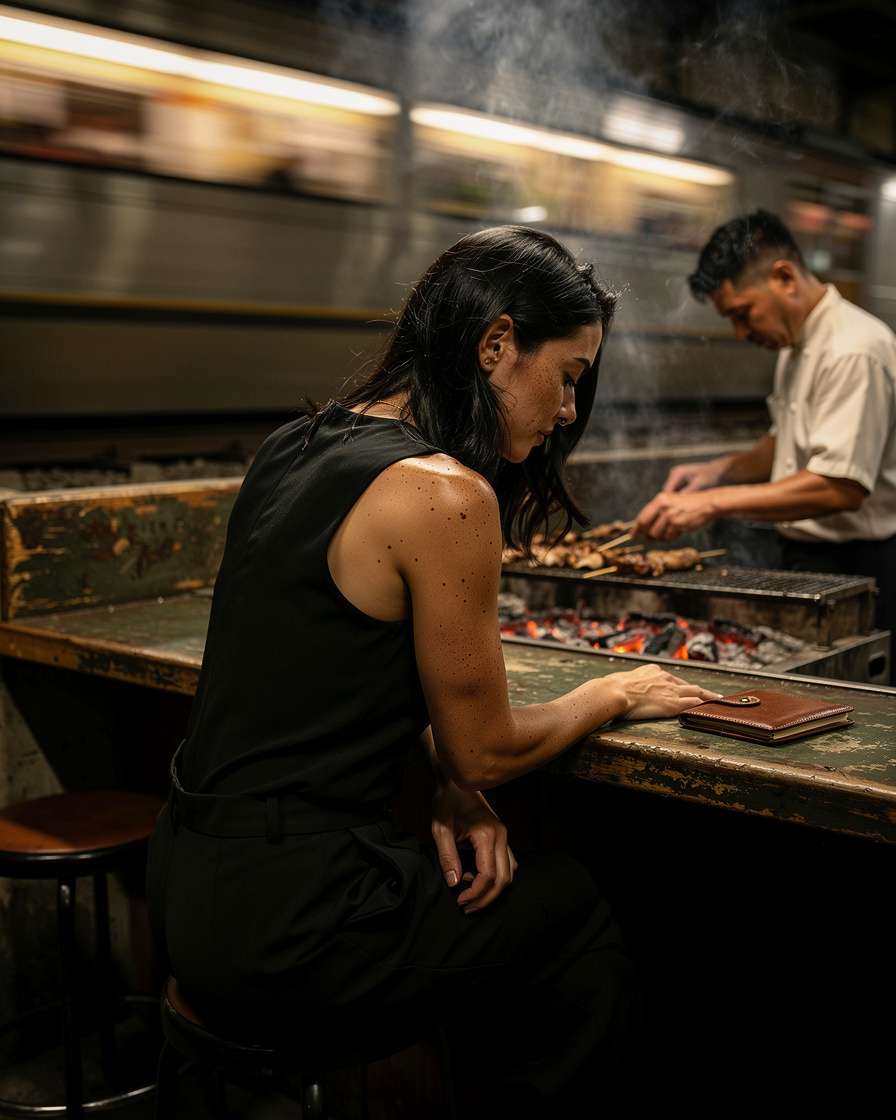
There are six seats here. I counted twice, because it seemed impossible that a whole night could fit into something so small. The cook works with his back half turned, feeding skewers over charcoal that glows orange every time he fans it. He doesn't talk much. He doesn't need to.
Above us, the trains pass on schedule, and the whole structure trembles, glasses rattling slightly against the counter. Nobody looks up. It's not an interruption here, it's the rhythm the place was built around. The Yurakucho tracks have had these little yakitori stalls tucked beneath them for decades, smoke rising straight into the girders, salarymen and tourists and old regulars sharing an elbow's width of counter space.
My highball sweats in the warm air. Chicken skin, char, a squeeze of yuzu on something I can't name and don't ask about. The man beside me has been coming here, he tells me in fragments of English, since before I was born. He orders without looking at a menu. I order by pointing.
This is the kind of place my camera loves and struggles with in equal measure: low light, quick hands, smoke curling into the lens. I get maybe three frames I'll actually keep. That feels right. Some nights aren't meant to be documented so much as sat inside.
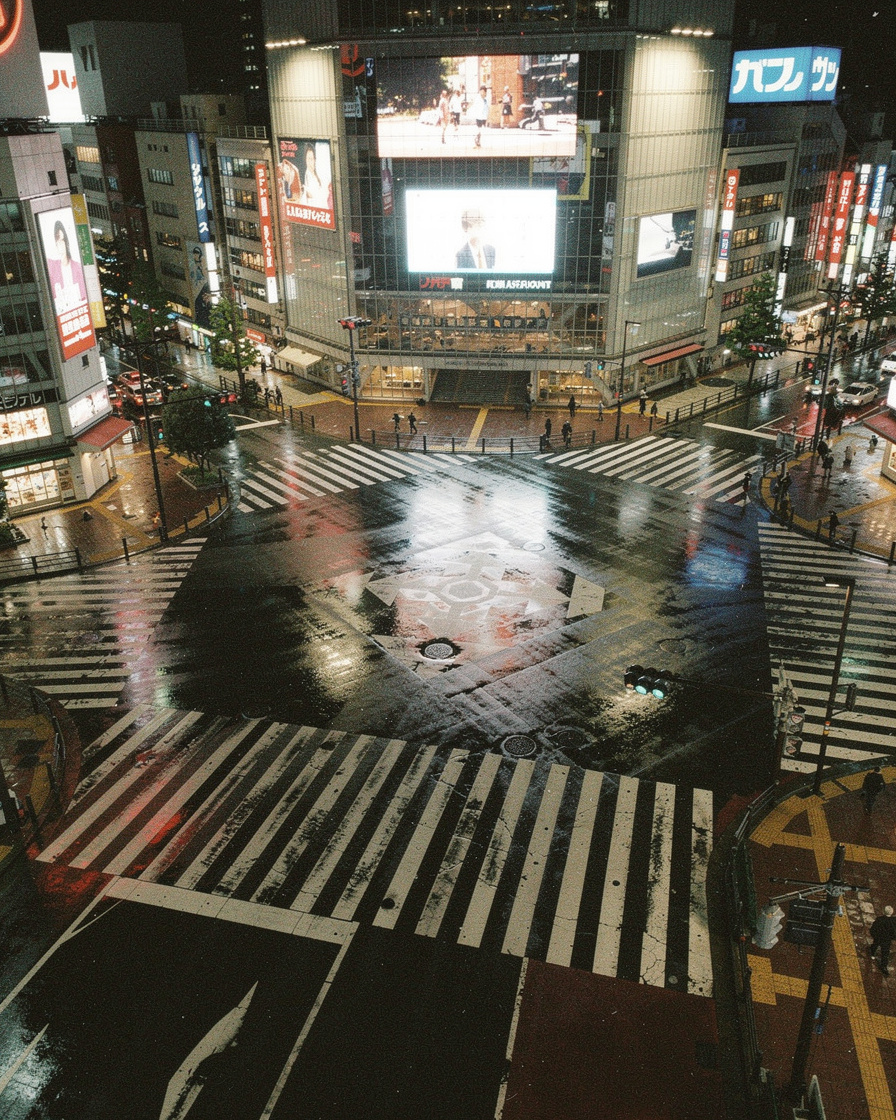
It's almost eleven. Tokyo outside is neon and vending machines and the hush of a city that still, somehow, knows how to be quiet. Down here it's just charcoal, the hiss of fat hitting flame, and the trains keeping time overhead like a metronome nobody asked for but everyone's grateful to have.