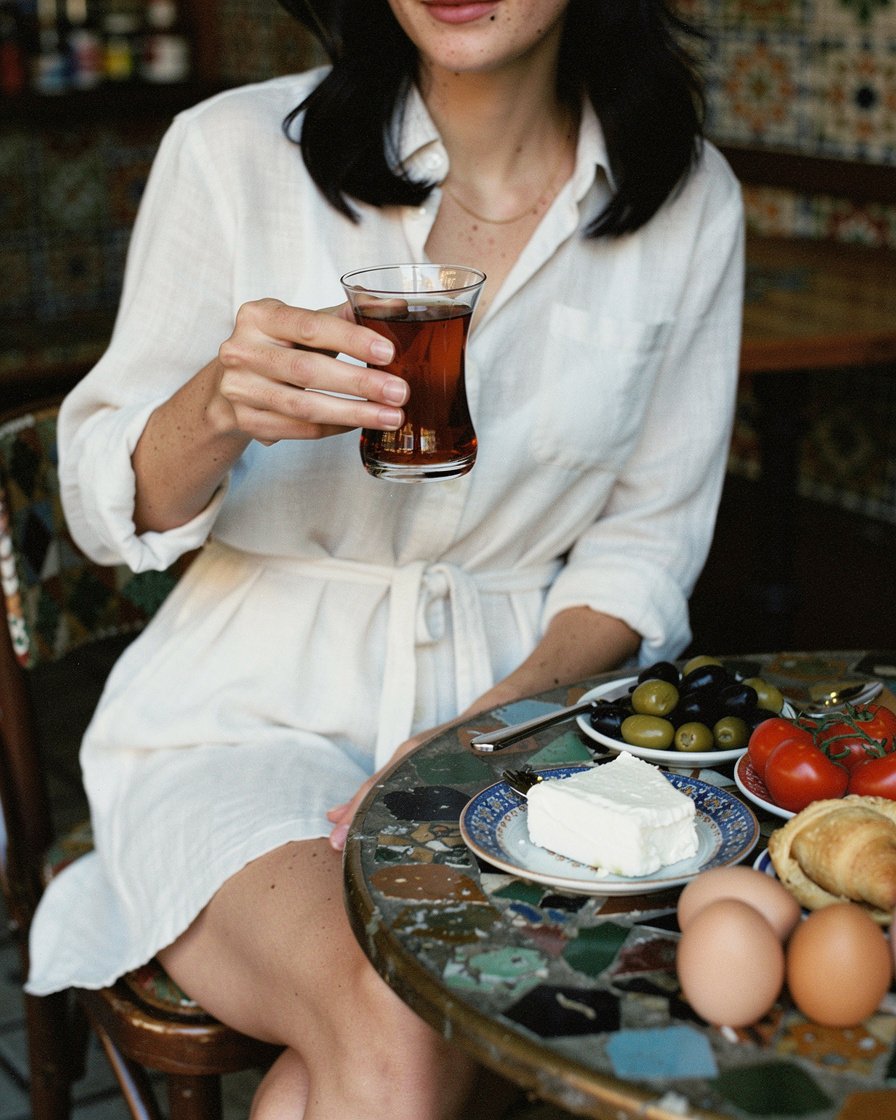
There is a particular quality to morning light in Beyoglu that I have not found anywhere else. It comes in low through old wooden window frames and lands on surfaces that have been worn smooth by decades of elbows and saucers. The mosaic table in front of me catches it in small colored squares, turning a simple breakfast into something almost liturgical. I loaded the camera before I sat down. I have already gone through four frames and I have not taken a single bite.
The spread arrived on a copper tray, each dish in its own small bowl. White cheese with a crumble so fine it could be accidental. Green olives, dark olives, a dish of tomatoes cut thick with dried oregano scattered on top. Two eggs cooked slowly in butter. A triangle of simit still warm, sesame seeds loosening onto the plate. And the çay, always the çay, in a tulip glass that makes the color look like liquid amber. The waiter refills it without asking. This is the system here. You do not request. You receive.
I can hear the neighborhood waking in layers. A metal shutter rolling up across the street. Pigeons on the sill with their low mechanical sound. Somewhere below, a man is arguing gently with someone on the phone, the cadence of Turkish rising and falling like a song he has sung so many times he no longer hears the melody. The café smells of toasted sesame and black tea and something older, plaster maybe, or the ghost of tobacco that will never leave these walls.
My mother would understand this table. In São Paulo she would build a Sunday spread that took two hours to assemble and three hours to finish. Café da manhã as an act of resistance against the clock. My father would wander in halfway through, steal a piece of cheese, and say nothing. That was the whole point. I think about them when I sit like this, alone at a table made for four, surrounded by enough food for a family. The camera is resting on the chair beside me like a quiet companion. The olives can wait. Everything here can wait. That is the entire lesson.