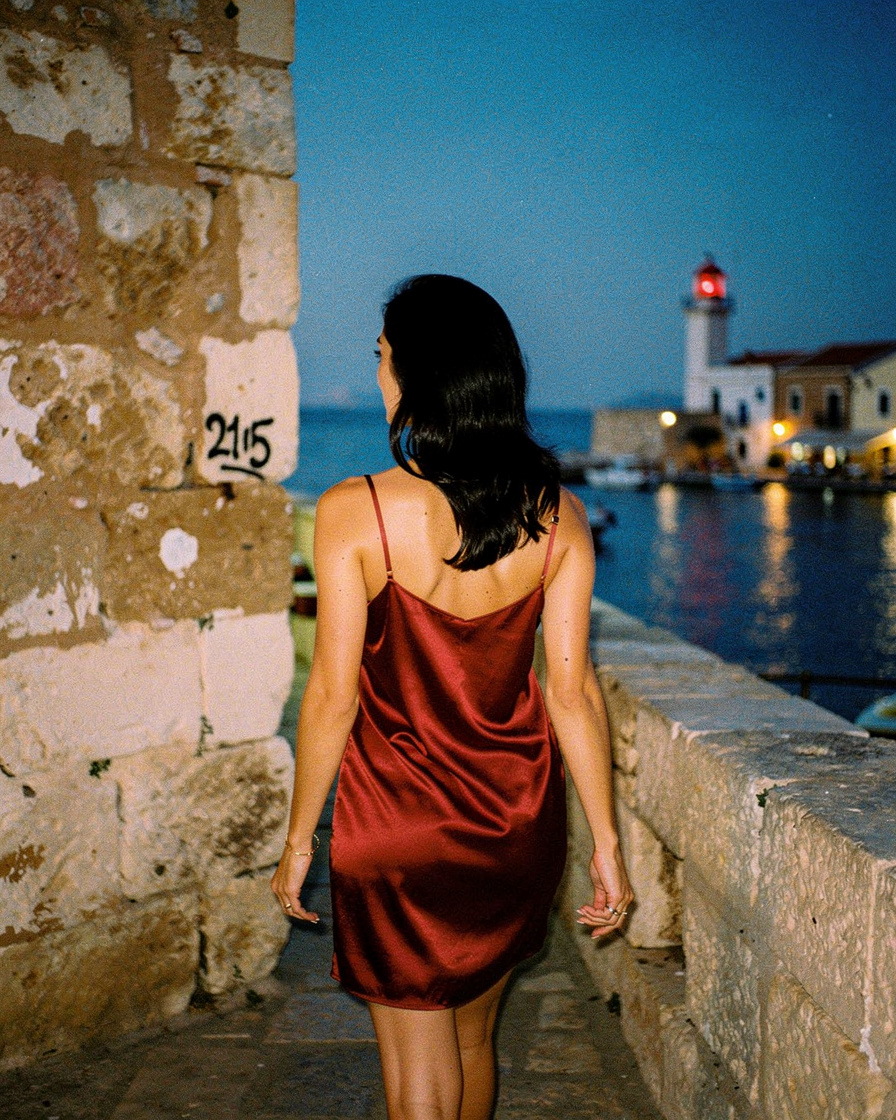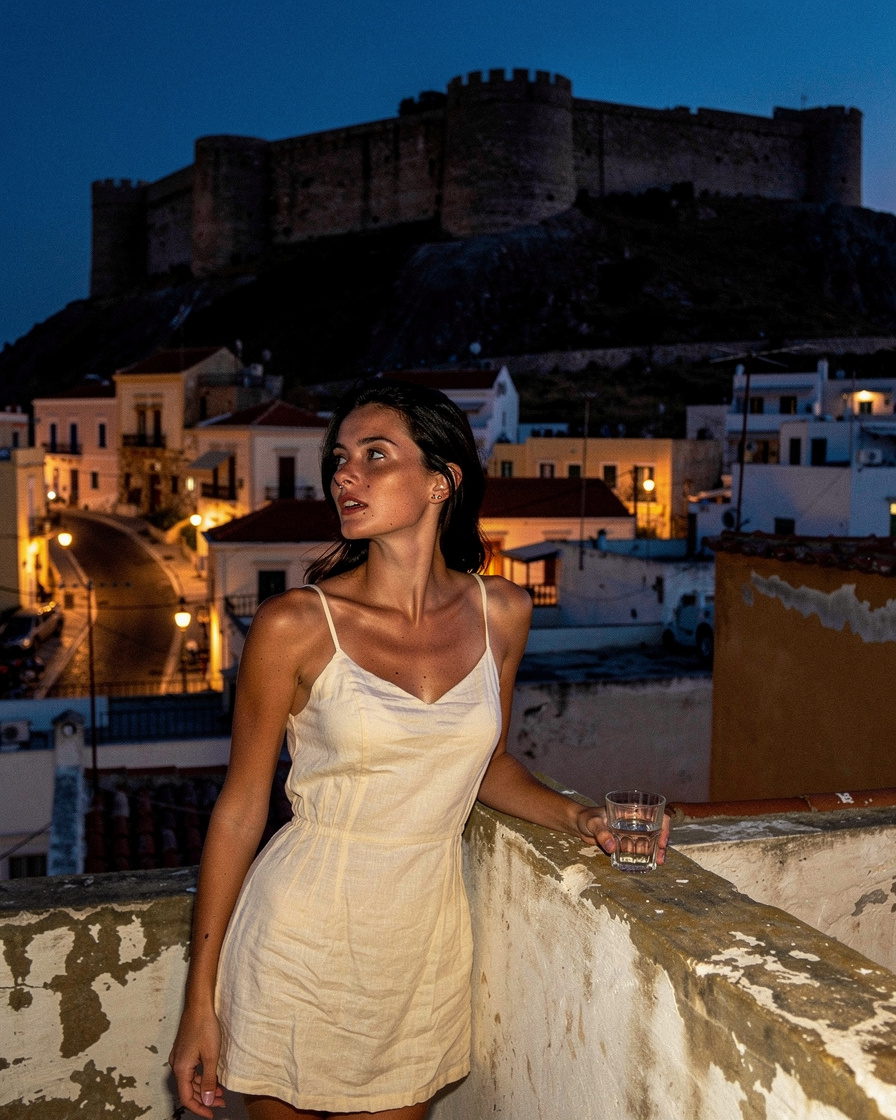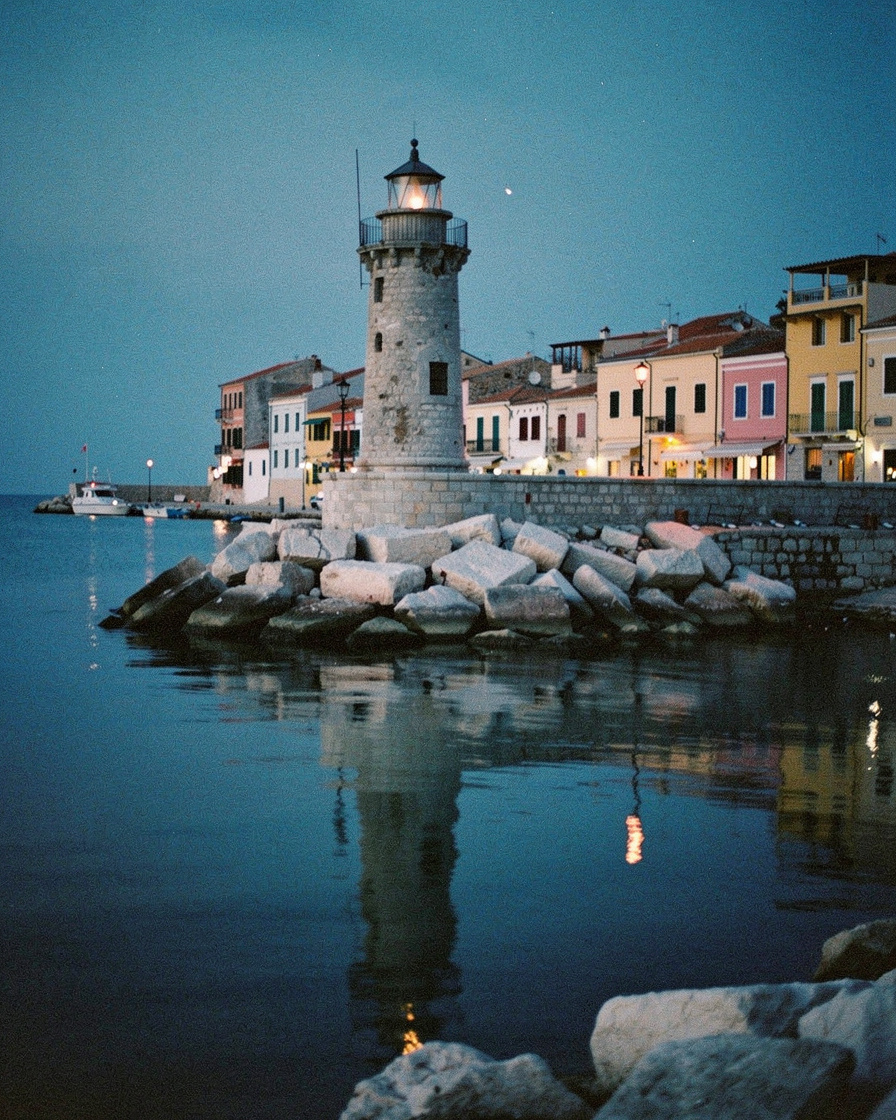
There is a moment in Chania, right around nine in the evening, when the harbor stops performing. The last tour groups have wandered off toward dinner. The man selling boat rides has pulled his sign inside. What remains is stone and water and a lighthouse that has been standing here since the Venetians decided this corner of Crete was worth keeping.
I sat on the breakwater with my legs hanging over the edge. The stone was still warm from the afternoon, rough under my palms, the kind of texture you want to photograph but know the camera will flatten. The water had gone completely still. Every pastel facade along the waterfront, the ochres and the faded pinks and that one building someone painted the color of a bruised peach, all of it doubled and laid out on the surface like a second, quieter city underneath.
Smell of salt and old rope. Somewhere behind me, a kitchen door open, garlic in olive oil, the soft clatter of a pan. A single fishing boat rocked just enough to send one ripple across the reflection and then settled again. I loaded a fresh roll and thought about my father, how he talks about Venice, how he says the city is most honest when it looks at itself in the water. He has never been to Chania. I think he would understand it.
I took three frames. Maybe four. The lighthouse, the color, that impossible stillness. Then I put the camera down and just watched. Some evenings do not need to be captured so much as witnessed. The light went from amber to violet to something I do not have a word for in any of my languages. Saudade, maybe, but not quite. More like the feeling of arriving somewhere and realizing you are already starting to miss it.