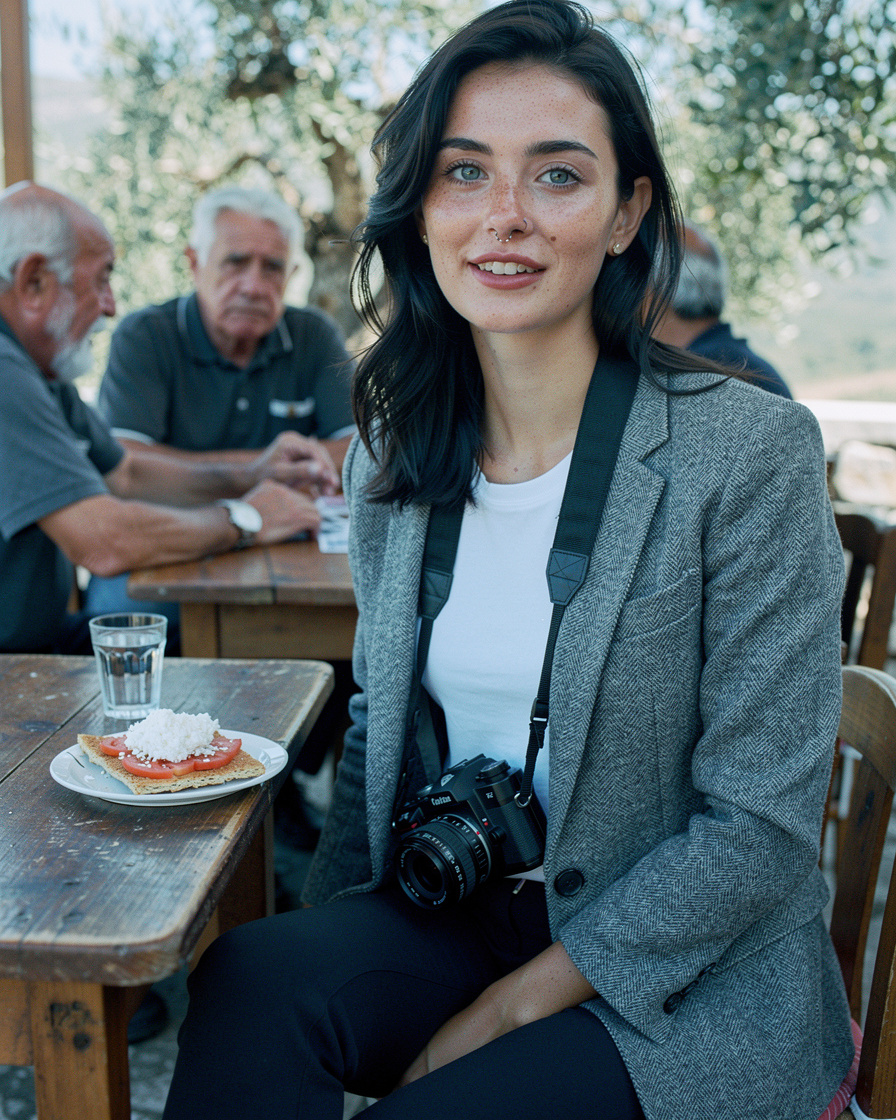
The kafeneion has four tables and no menu. You sit, and something arrives. Today it was a dakos, the rusk so hard it could survive a century, softened only by crushed tomato and a crumble of myzithra that tasted like the hillside smells. Salt, grass, animal warmth. A small glass of raki appeared beside it without anyone asking. The man who poured it had hands like old leather. He nodded once and went back to his card game.
Three men at the next table have been playing since before I walked in and will be playing long after I leave. Their voices are low, punctuated by the slap of cards on wood. One of them laughs and it rolls through the room like something physical. Outside, the olive trees are bright and still. Nothing moves except a cat crossing the road with the confidence of someone who owns the whole village. Maybe she does.
I keep thinking about how mornings like this used to make me restless. The slowness felt like a dare, like the place was testing whether I could sit still long enough. Somewhere around my second year of living out of the duffel, the restlessness broke. Or maybe it just wore itself out. Now I notice the way the tomato juice stains the edge of the rusk a particular shade of orange. I notice the raki is sharp and floral at the same time, and that it warms the chest even though the mountain air is already gentle.
The camera sat on the table for a while before I picked it up. One frame of the dakos in that slant of light. One frame of the card players' hands. That felt like enough. Some mornings are not about collecting images. They are about letting the place do its work on you, slowly, like water on stone. Devagar. The old man refilled my glass without looking. I didn't say no.