Naples was still on my skin when I landed. That particular airport smell of espresso and industrial carpet, then the cold recycled air of the cabin, then Athens. The taxi driver didn't say much. He pointed once, out the windshield, at a hill lit gold against a violet sky. I leaned forward. He nodded like he'd done this a thousand times. He had.
Plaka at night is a different animal than what the guidebooks sell you. The tourist restaurants were closing, chairs stacked on tables, waiters smoking in doorways. The cobblestones were uneven enough to remind my ankles they existed. Somewhere a cat knocked something off a ledge. Somewhere else, bouzouki from a phone speaker, tinny and far. The air smelled like grilled octopus and jasmine, which shouldn't work together but does, in the way that only cities this old can hold contradictions without flinching.
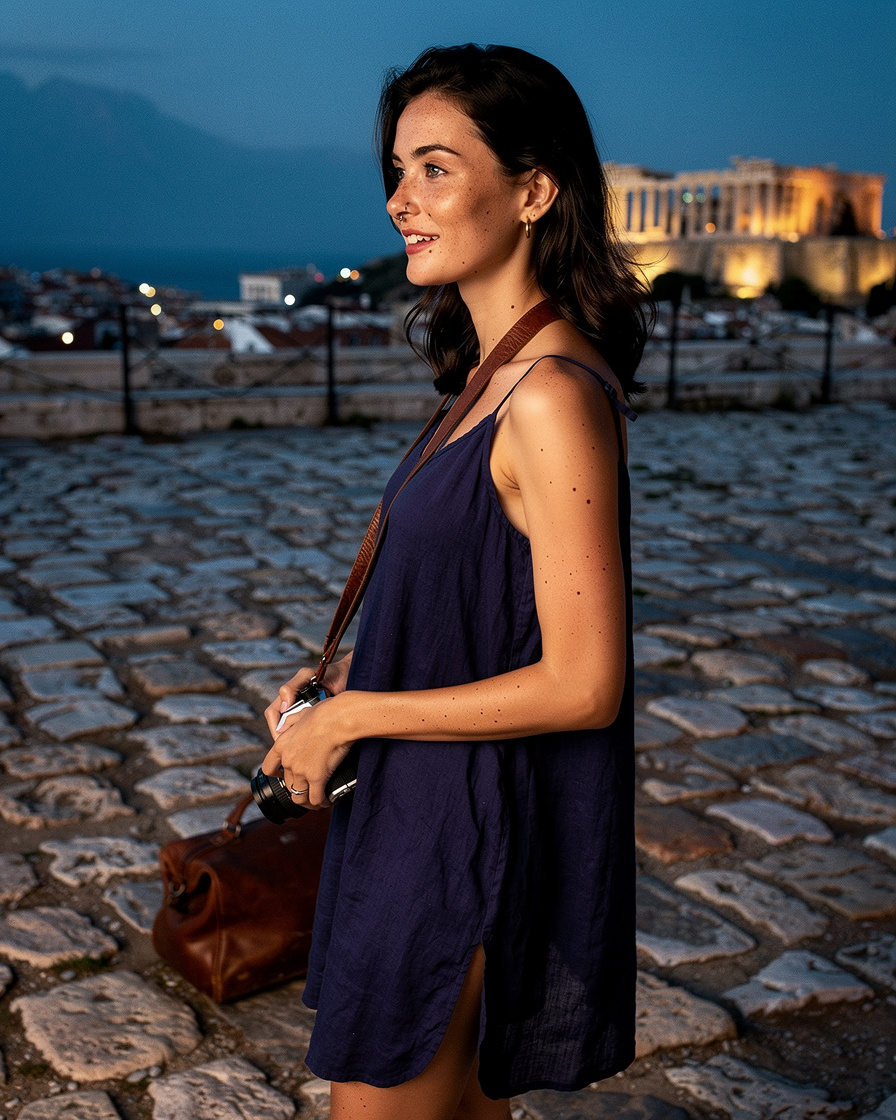
I put my duffel down at a corner where the street tilted upward and the buildings parted just enough. There it was. The Parthenon, floodlit, pale gold, impossibly still. It does not perform for you. It just sits there, the way a mountain sits there, except someone carved it column by column. I stood with my neck craned back and felt the specific smallness of being a person with a bag and a camera in a city that was already ancient when it was already ancient. The Leica stayed in the duffel. Some things you see first with your eyes or not at all.
A woman walked past with a small dog. She glanced at me, at the duffel on the ground, at my face tilted up, and she smiled the way locals smile at people seeing it for the first time. Not pity. Not pride exactly. Recognition. I smiled back. Picked up the bag. Walked deeper into the neighborhood to find my room, the columns glowing behind me like a night light left on by a civilization that wanted to make sure you could find your way.